
The Story
Why it exists.
The beginning
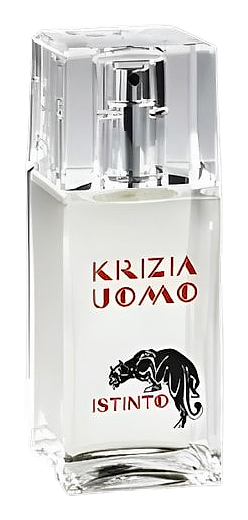
Istinto translates directly to instinct, that word was the brief. Krizia, the Milanese fashion house founded by Mariuccia Mandelli in 1954, had built its men's line on quiet confidence rather than declaration. The 2006 release of Uomo Istinto arrived as a continuation of that philosophy. Where other masculine fragrances of the mid-2000s chased aquatic transparency and fresh wood accords, this one reached for something earthier. The name itself was the statement: instinct as opposed to performance, presence as opposed to projection.
The pyramid reveals the intent. Juniper berries bring a cold, almost coniferous clarity, that high-altitude quality. Black pepper and coriander lift the opening with a spice that reads green rather than warm. The heart of geranium, myrtle, and rosemary introduces an aromatic complexity unusual for men's fragrances of the period, when minimalist fresh notes dominated. Then the base: amber, labdanum, and patchouli ground everything into something that sits close to the skin rather than filling a room. It's a composition designed for proximity, for the kind of intimacy that performance-oriented fragrances sacrifice.
The evolution
The opening lands crisp and immediate, black pepper prickling against juniper's cool resin, coriander adding a faint herbal lift. Within minutes the geranium arrives, bringing a subtle floral undertone that prevents the whole thing from reading as merely masculine. The rosemary and myrtle hold the heart for a couple of hours, an aromatic bridge between the sharp opening and the warming base. The drydown is where Istinto earns its name. Amber emerges first, soft and honeyed, followed by labdanum's resinous depth and a patchouli that stays close to the skin rather than projecting outward. On most skin types, this phase lasts four to six hours, intimate, present, requiring someone to lean in to find it. The next day, a faint trace of amber and labdanum may linger on fabric. It doesn't shout. It doesn't need to.
Cultural impact
Krizia Uomo Istinto arrived in 2006 amid a market saturated with aquatic fresh fragrances and mass-appeal woody compositions. Rather than competing in that space, it staked out different territory, aromatic fougère with green and herbal dimensions that read as more sophisticated than the decade's dominant masculine offerings. The fragrance found its audience among wearers who wanted complexity without projection, instinct without performance. While it never achieved the commercial reach of its contemporaries, it developed a reputation among those who discovered it as something quietly distinctive, a masculine fragrance that refused the expected gestures.