The Story
Why it exists.
The beginning
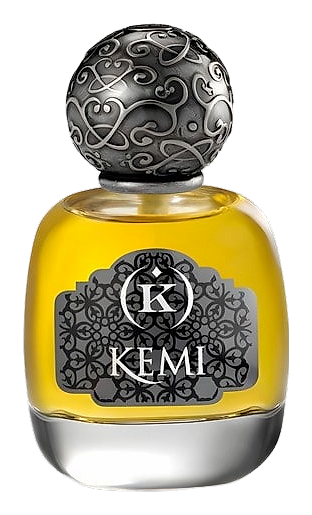
Chris Maurice designed Kemi as the signature expression of a house built on alchemical philosophy. The name Kemi traces to the ancient Egyptian word for Egypt, later adopted into Arabic as al-kimiya, the precursor to chemistry. Alchemists called their work the Great Work for a reason: transmuting base materials into something precious. That philosophy runs through every bottle. Kemi the fragrance does exactly that, takes raw, challenging materials and transforms them into something worth wearing.
The combination of caramel with castoreum and civet is the kind of move that either works brilliantly or falls apart entirely. Here, it works. The caramel doesn't soften the animalic notes, it contextualizes them, sweetening the edge without erasing it. Gurjan balsam adds a resinous depth that bridges the heart to the base, where vanilla and sandalwood provide the warmth that keeps everything grounded. The woody notes throughout aren't decoration. They're structural. Oud and cedar at the top become sandalwood and woody notes at the base, a complete arc from sharp opening to warm close.
The evolution
The opening announces oud and cedar with immediate authority. Cedar's dry, almost pencil-shaving quality cuts through the oud's darkness, creating an opening that's both woody and bright. The caramel arrives within the first minutes, golden and warm, threading sweetness through the wood before the heart fully develops. Within the first hour, the animalic notes take over. Castoreum and civet emerge together, that characteristic musky-animalic signature that defines the drydown. This is where Kemi separates itself. The animalic heart isn't buried or softened. It's the point. The base arrives as vanilla and sandalwood, warm and creamy, anchoring everything that came before. Lasts well into the evening on most skin types. On fabric, the fragrance can linger for days, vanilla and wood holding on long after the animalic notes fade. By the next morning, skin carries a warm, animalic sweetness that reads almost as a second skin scent. Oud and vanilla, intertwined.
Cultural impact
Kemi occupies a specific corner of the niche world, the animalic enthusiast's shelf. The castoreum and civet combination isn't common in modern perfumery, which makes it notable and polarizing. It appeals to those who've explored the genre enough to know what they're looking for, and who appreciate a fragrance that doesn't try to please everyone.