The Story
Why it exists.
The beginning
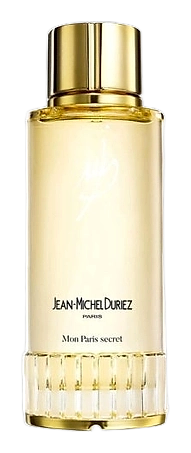
Mon Paris Secret emerged from Jean-Michel Duriez's desire to capture a hidden Parisian allure in 2017. After founding his house in 2016, Duriez set out to create a fragrance that felt like a private conversation between bright citrus and exotic fruit, echoing his belief that each ingredient should serve a distinct purpose in the narrative of the scent. The result is a composition that opens with bergamot's sparkling clarity before evolving into something far more Intimate.
Duriez approaches each note as a deliberate choice rather than a default one. Bergamot was selected for its clarity and energy, mango for its ability to bridge bright and warm registers, and coriander for the quiet complexity it adds to the heart. The base relies on vanilla and tonka bean for sweetness, while patchouli and myrrh provide depth. Labdanum, tolu balsam, and cinnamon round out the drydown, ensuring that warmth and spice support rather than overwhelm the earlier notes. The result is a fragrance where no single element dominates; instead, each note plays a specific role in building a cohesive, multi-layered experience.
The evolution
The fragrance unfolds through a deliberate arc. Bergamot opens the story with a bright, citrus spark that feels like a stolen glance across a Parisian garden. Mango then arrives, bringing tropical creaminess that softens the earlier sharpness into something more personal. Coriander threads through the heart, adding a subtle herbaceous counterpoint that keeps the sweetness from becoming cloying. As the base emerges, vanilla and tonka bean dominate, while patchouli, myrrh, labdanum, tolu balsam, and cinnamon form a rich, resinous drydown that feels like settling into a warm, candlelit room. The journey from citrus sparkle to tropical warmth to deep resin makes the fragrance feel like a story told in three chapters.
Cultural impact
Mon Paris Secret emerged in 2017 at a time when the perfume world was embracing gender‑fluid narratives, and its unisex composition helped broaden the conversation around scent as a personal statement rather than a gendered accessory. By pairing a Mediterranean citrus top with tropical mango and coriander, the fragrance nods to global trade routes that have historically linked Europe and the Mediterranean to exotic spices, subtly referencing the cultural exchange that has shaped modern perfumery. Its amber‑sweet base, anchored by vanilla and patchouli, evokes the warmth of historic bazaars, while the inclusion of Myrrh and Opoponax recalls ancient ritualistic uses of fragrance in both religious and social contexts.