
The Story
Why it exists.
The beginning
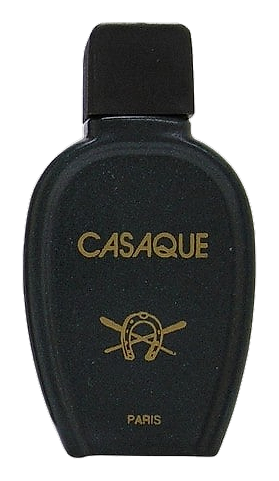
Casaque arrived in 1989, establishing a register the house would hold for decades: classical French structure, no spectacle, nothing shouting. This was the scent that defined an early register for the brand, a composition that relied on woody and aromatic notes working together and trusted them to carry the weight. The name carries a military resonance drawn from cavalry tradition, evoking something protective and layered without resorting to obvious cues. Layered and built to endure, the fragrance presents itself through the liquid alone: clear glass, a modest silhouette, nothing to admire except what's inside. Production was apparently discontinued, which makes finding a sealed bottle less a purchase and more a quiet search.
The composition emerged in 1989 as part of Jean Louis Vermeil's early catalogue, released during a period that defined the brand's first chapter. The fragrance carried a green-aromatic sensibility rooted in classical French perfumery, built on oakmoss, juniper, and pine needles with a restrained structure that let each material speak. It became a reference point within the brand's output.
The evolution
Over the decades since its 1989 release, Casaque has shifted from active catalogue offering to something harder to source, with availability growing thinner as sealed bottles become harder to find. The fragrance itself has acquired a reputation that rests on that scarcity and on the loyalty of wearers who discovered it in its catalog years. The formula reads as a period piece, a snapshot of late-80s French perfumery that hasn't been diluted by trend cycles. Those who still wear it tend to have a specific relationship with the material: oakmoss as it was used before IFRA restrictions tightened, pine and juniper in proportions that feel generous by current standards, a base of cedar and coumarin that gives the fragrance its quiet staying power. The composition wears close to the skin and evolves slowly, the cold aromatic opening giving way to a warm mossy base over several hours.
Cultural impact
Casaque holds a particular position within late-80s French aromatic perfumery, a genre that favored green, mossy compositions built on classical fougère structures. It appeals to wearers with a developed taste for that register, people who gravitate toward the genre's signature interplay of pine, juniper, oakmoss, and coumarin rather than the sweeter mainstream offerings that defined much of the same era. Its reported discontinuation has given it a particular standing among collectors of the period, and a sealed bottle carries weight beyond the liquid inside.