
The Story
Why it exists.
The beginning
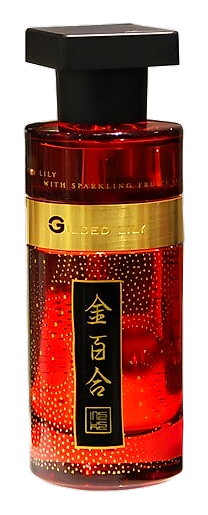
The name comes from Shakespeare's King John: "to gild refined gold, to paint the lily." The phrase means to improve what doesn't need improving, a paradox, a quiet joke. Ineke Rühland ordered the Goldband Lily of Japan, yama yuri, for her garden in San Francisco. She wanted to learn the fragrance by living with it, the way a perfumer learns a material when it's outside the window every morning. The 2010 fragrance became that study distilled. A chypre fruity with a formal lily heart, named after the act of perfecting perfection.
Most lily perfumes lean on lyral, a synthetic that produces that round green aquatic quality most people recognize as "lily." Gilded Lily refuses that shortcut. The Goldband lily here is the actual material: spicier, more animalic, almost suede-like in its warmth. Ineke Rühland built the composition around that specificity. The fruity top, rhubarb, pineapple, grapefruit, doesn't try to soften the lily. It pushes against it, creating tension between the tart opening and the formal heart. The result is a chypre that behaves like a chypre should: structured, mossy, committed to its own architecture.
The evolution
The opening hits tart and bright, rhubarb sharp, pineapple sweet, grapefruit cutting through with citrus edge. Elemi adds a resinous warmth that stops it from being purely fruity. That phase lasts maybe 20 minutes. Then the lily arrives, and it's not the lily you expected. No aquatic roundness, no green softness. This one has weight. The aldehydic quality gives it a powdery suede warmth, almost like a pressed flower from a book. The base is where the 70s chypre tradition lives: oakmoss, patchouli, labdanum. Green, earthy, structured. The patchouli keeps it from being museum-piece vintage, it stays contemporary. The whole thing holds for 6-8 hours, the drydown staying close and mossy, the kind of scent that surprises you when you lift your wrist hours later.
Cultural impact
Gilded Lily occupies an interesting position: a proper chypre in an era when most florals had abandoned the form. Released in 2010, it arrived during a period of renewed interest in classic fragrance structures, though Ineke's approach stayed independent of the mainstream. The composition, tart-fruity opening, formal lily heart, mossy base, appeals to wearers who remember what chypres used to be and newcomers curious about the category's rules. Now discontinued, it has accumulated a small devoted following who appreciate its structural commitment.