
The Story
Why it exists.
The beginning
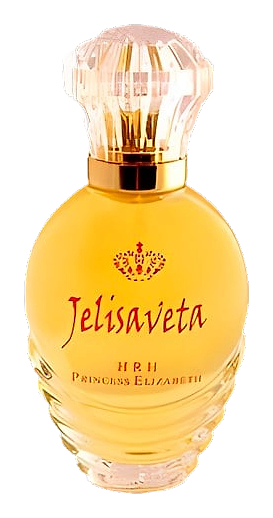
Sophia Grojsman approached Jelisaveta with a clear brief: capture a Mediterranean morning in a bottle. Not just the notes of citrus and flowers, but the specific warmth of coastal sunlight at a certain hour. The fragrance launched in 2002 as the second composition under HRH Princess Elizabeth's name, following the original simply titled E. Originally presented in the US under the name Mon Ange, it found its true identity when relaunched in Serbia as Jelisaveta, a name that tied it directly to the royal house. The relaunch wasn't a correction. It was the fragrance coming home to the audience that understood it best.
The note pyramid is unusually cohesive for a citrus-floral, citrus, yellow floral, white floral, all pointing in the same direction. Grojsman's choice to feature linden blossom as a structural element rather than a supporting player is what separates this from dozens of similar compositions. Yellow florals carry a reputation for indolic drift, for becoming too sweet or too much. Here, citrus threads through the entire composition like a guide rope, keeping jasmine honest and preventing honeysuckle from tipping into air freshener territory. Neroli does the invisible work, bridging the opening citrus with the emerging florals so the handoff never feels abrupt.
The evolution
The opening arrives immediately. Amalfi lemon, not the sharp, chemical citrus of cleaning products, but the soft, almost candied acidity of a lemon that's actually ripe. Orange follows within seconds, rounding the edges. Neroli adds its characteristic bitter-floral twist. Within five minutes, the composition has settled into what reviewers consistently describe: a golden, sunlit warmth. The honeyed sweetness of honeysuckle emerges next, threading through the citrus rather than overwhelming it. Jasmine enters quietly, not the dramatic tropical jasmine of summer nights but something more restrained, blushing rather than announcing. Linden blossom holds the structure together throughout, the quiet anchor that prevents the whole thing from drifting into generic floral territory. The drydown is where above-average longevity reveals itself. Citrus fades first, then honeysuckle, but the white florals linger close to skin for hours after. On dry skin, this becomes a skin scent rather than a room scent, intimate, present, noticed only by those who lean in.
Cultural impact
Community perception skews strongly positive, with particular praise for longevity described as above-average for the citrus-floral category. Seasonal preference skews heavily toward spring and summer. The daytime designation in usage data tells you everything: this is a morning fragrance, a sunshine fragrance, a reason-to-be-alive fragrance. What strikes most wearers is how consistently it delivers that Mediterranean morning quality without ever feeling like a cliché. It occupies an interesting space, royal-adjacent, underrated, and untouched by the reformulation cycles that have marred more famous compositions. For those who discover it, there is often a period of wondering why more people have not heard of it.