
The Story
Why it exists.
The beginning
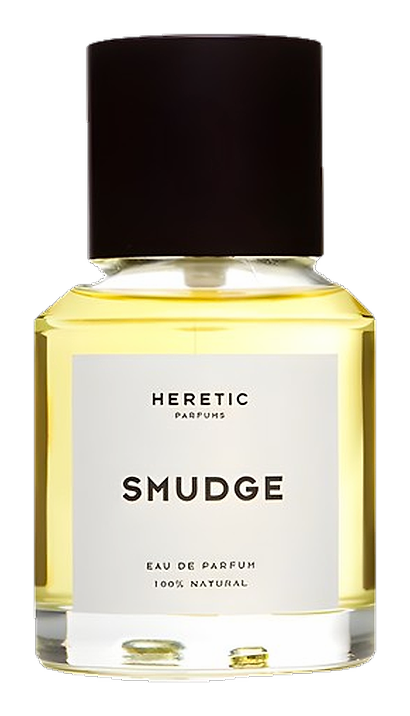
Smudge exists as a deliberate statement within botanical perfumery. The name is a provocation, a reference to smudge sticks, the bundles of dried herbs burned for centuries in ritual cleansing. The official description calls it 'designed to clear energy,' which sounds like marketing copy until you smell it and realize it's more literal than figurative. This is what burning sage smells like when someone takes the idea seriously. Not as a concept. As a practice. Heretic built its identity on being the outsider, told that natural perfumery was the work of housewives and heretics. Then named the brand after it. Smudge is the logical extension of that philosophy: a fragrance that doesn't apologize for what it is, what it's named for, or what it asks of the wearer.
What makes Smudge interesting isn't that it's smoky, plenty of fragrances claim that. What makes it interesting is that it commits to the botanical honesty Heretic preaches. The smoke comes from frankincense and labdanum, not from added synthetic smoke compounds. The herbal quality comes from clary sage and juniper, materials that smell green and slightly bitter on their own. In combination, these create a fragrance that reads as accurate rather than interpretive. The tonka bean adds a dimension that keeps it from becoming austere, a whisper of warmth that prevents the composition from becoming preachy. This is smoke that learned something in a forest, not in a lab.
The evolution
The opening arrives confident and unapologetic. Frankincense smoke, the sharp brightness of Sichuan pepper, Atlas cedar lending structure. It's immediate, no waiting, no false modesty. The herbal heart of clary sage and juniper arrives quickly, bringing something green and slightly medicinal that cuts through the density. This is where the fragrance earns its name. Not by smelling like a smudge stick, but by feeling like one, smoke that clears rather than crowds. The drydown is where it becomes something else. The smoke recedes from the foreground but never fully leaves, settling into the skin like the memory of a burned thing. Labdanum, fir balsam, patchouli, these form the base, dense and slightly resinous. Sandalwood adds creaminess, but it's subtle, never sweet. What remains is the smell of smoke that lived in your clothes. The kind that doesn't wash out easily, and isn't meant to.
Cultural impact
Smudge has become a reference point for natural smoky fragrances. The fragrance attracts wearers who want a scent that functions as a tool rather than a decoration, something with purpose beyond aesthetics. In the niche fragrance landscape, it has a ritualistic quality that appeals to those seeking something with more than aesthetic appeal. Heretic's approach to ingredient transparency has built a community of committed wearers who consider Smudge a regular rotation piece rather than a special occasion fragrance.