
The Story
Why it exists.
The beginning
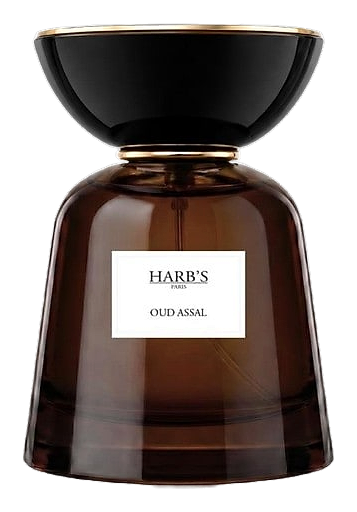
Oud Assal arrived in 2025 as part of Harb's Les Éternels collection, a line that draws on a rich palette of references spanning continents and centuries. The name itself carries weight: Assal translates to honey, and the name signals exactly where this composition lives. The honey note isn't background sweetness. It's the spine. Everything else, from the Ceylon cinnamon that opens the door to the oud and leather that close it, is built to frame that golden, resinous core. On skin, the honey announces itself early, warm and almost edible, before the cinnamon sharpens the edges with a dry, woody heat. As the hours pass, the oud deepens into something smoky and leathered, the honey never quite disappearing but settling into a quieter, ambered sweetness that clings close.
What makes Oud Assal interesting is the deliberate tension between the gourmand and the smoky. Honey and vanilla could easily slide into something safe, a dessert accord. But the birch tar and styrax refuse that route. Birch brings a scorched, almost medicinal sharpness. Styrax adds a dense, balsamic weight that reads more temple than bakery. Then the oud arrives with its earthy depth, grounded by patchouli and leather. The result is a composition that starts in a spice market and ends somewhere far older, darker. Harb's doesn't blend these materials into a smooth whole. It lets the friction show.
The evolution
The first 30 minutes belong to the cinnamon. It arrives bright, almost sharp, with a dry warmth that coats the skin like the air around a just-lit match. The honey and styrax begin threading underneath within the first hour, turning that spice into something deeper, a golden, resinous sweetness that feels less like baking and more like incense smoke curling through a room. By hour two, the oud and leather have settled in properly. The cinnamon recedes but never disappears. It keeps flickering at the edges, keeping the composition from going too dark. The drydown, somewhere around hour four onward, is where the vanilla and amber take over, a warm, skin-close finish that still carries a faint smoky memory of where it started. On fabric the next morning, the leather and patchouli are the last ones standing, quiet but unmistakable.
Cultural impact
Oud Assal reads as a fragrance that takes the older, resinous traditions of oud perfumery seriously without abandoning the warmer, more accessible instincts that have shaped modern oud releases. There's no sharp austerity here, no stripped-down smoke-and-wood austerity, but also none of the whipped, vanillated softness of purely gourmand oud interpretations. Instead, the honey and vanilla are woven directly into birch and leather, giving the composition a spiced, smoky warmth that feels rooted in older formulations while remaining entirely wearable in a contemporary context. It sits in dialogue with both worlds.