The Story
Why it exists.
The beginning
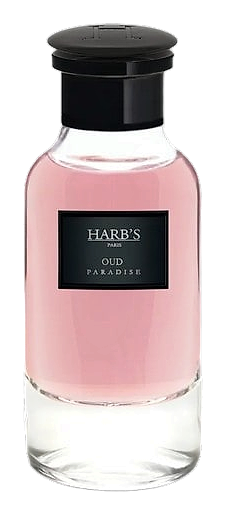
Oud Paradise arrived in 2024 from Harb's, a name that suggests a fragrance house with serious ambitions. Paradise here isn't tropical, and it isn't naive. It's the fantasy of a place where sweetness doesn't apologize, and warmth has weight to it. The name promises escape. The composition keeps its word without leaving the room. The formula is built on caramel, rose, patchouli, vanilla, and wood, five ingredients that read less like a technical list and more like a set of emotional anchors. Caramel brings indulgence. Rose brings tenderness. Patchouli brings shadow. Vanilla brings comfort. Wood brings structure. Every element earns its place. Oud Paradise is a fragrance that wants to be felt before it's analyzed, and its sweetness isn't a marketing gesture.
What's interesting is what's missing. Oud Paradise carries a name that suggests agarwood as the star, yet the actual pyramid is built on caramel, rose, patchouli, and vanilla, with woody notes supporting rather than leading. That inversion is the point. The caramel isn't a top-note garnish; it's the opening act, sustained and deliberate, the way French pastry uses sugar as a structural element rather than a finishing touch. It arrives fast, opens with a dense, golden warmth that immediately dominates the spray, and holds that grip without ever tipping into tooth-aching territory.
The evolution
The opening is almost aggressively inviting. Caramel leads, round and golden, the kind of sweetness that reads as warm rather than cloying. It arrives with a syrupy density, pouring across the skin in a wave of burnt-sugar richness that announces itself without apology. As the composition breathes, rose threads through the sweetness, lending a dewy, jammy lift that keeps the caramel from sinking into pure confection. The rose is soft and rounded, more preserve than petal, and it adds a floral tenderness that the opening alone wouldn't suggest. The patchouli arrives quietly after that, a shadow at the edges, earthy and slightly bitter, and the composition starts to darken. There's a chocolatey, almost cocoa-dust quality in this phase, a depth that comes from the patchouli's lower registers rather than from any added gourmand note.
Cultural impact
Oud Paradise sits firmly in the gourmand-leaning corner of contemporary fragrance, a category it approaches with more nuance than the genre typically allows. Where many compositions in this space reach for oud, incense, or heavy resins as their anchoring element, this one builds its identity around caramel and rose, using patchouli and wood as the structural counterweight. The result is a scent that reads as indulgent without tipping into oriental cliché, sweet without becoming confectionary, and wearable in a way that doesn't require a specific season or setting to make sense.