The Story
Why it exists.
The beginning
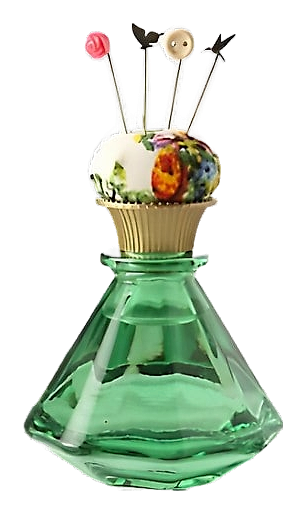
The name says 1842, but Rosa Alba 1842 is a 2010 creation from Marypierre Julien of Givaudan. The title points to something older: Rosa alba, the white rose cultivated in European gardens for centuries. Not the aggressive Damask or the blowsy hybrid teas that came later. Alba roses have a particular coolness, less honey, more history, something almost mineral beneath the petals. The bottle design leans into this. An inkwell-shaped EDP flacon topped with a pincushion and Victorian pins. As if the fragrance itself had been waiting in a desk drawer since the era it names.
What makes the structure unusual is what surrounds the rose. Darjeeling tea is an unusual top note, most perfumers reach for green tea or the more abstract "tea" accord. Here it arrives crisp and almost astringent, a counterpoint to the rose rather than a support. The pink pepper adds a tiny spark, enough to keep the florals from becoming precious. Wisteria is the real wildcard in the heart, it is powdery in a way that can read vintage, even slightly medicinal depending on your nose. Cashmere wood and Kashmiri musk anchor the base, giving the composition a warmth that stays close to skin. The contrast between the cool tea opening and the warm, intimate drydown is where this fragrance lives.
The evolution
The opening announces itself clearly: Darjeeling tea, bright grapefruit, a small pink pepper spark. The citrus lifts first, then the tea settles into dominance for the first thirty minutes or so. The rose enters quietly, Alba rose is not a shouty rose, and wisteria follows almost immediately, the two florals braiding together in a heart that reads as soft and powdery. The handoff to the drydown is not dramatic. The wisteria fades last, leaving a trace of its powdery quality even as the cashmere wood, amber, and musk step forward. By hour three, the fragrance has become skin-warm and intimate. The musk is the longest-lived material here, it holds everything in its final phase, quiet and present only to the wearer. Moderate sillage throughout. The drydown can stretch to six hours on most skin types, though dry skin may pull it shorter.
Cultural impact
Rosa Alba 1842 arrived in 2010 at a moment when niche perfumery was shifting toward cooler, more intellectual compositions. The name itself is a quiet provocation: invoking the ancient Rosa alba rose species while anchoring the fragrance to a precise year, suggesting both timeless botanical tradition and deliberate modernity. Happ & Stahns built their reputation on compositions that reject easy florals in favor of tension and refinement, and Rosa Alba 1842 became their signature argument that tea and powder can anchor a rose without diminishing it. The wisteria inclusion was unusual enough to generate discussion in enthusiast circles, where it remains a touchstone for those exploring beyond conventional rose fragrances.