The Story
Why it exists.
The beginning
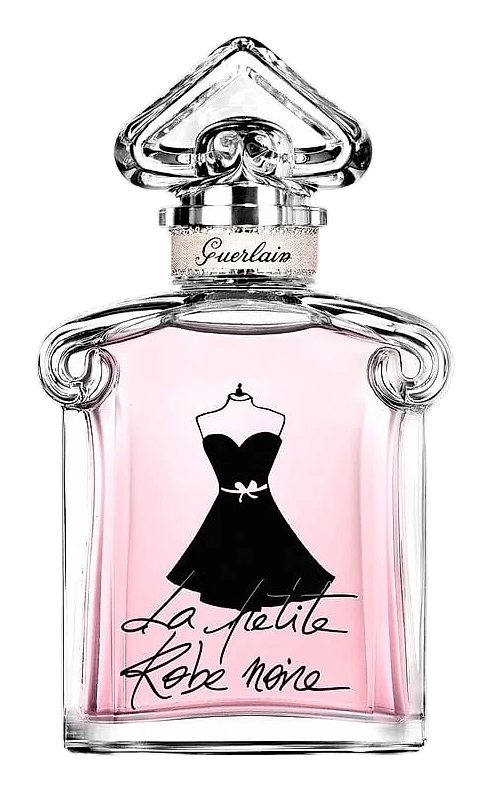
The original La Petite Robe Noire arrived in 2012 as Guerlain's love letter to the rose, their signature flower, reimagined with the house's finest raw materials. By 2014, the house wanted to say something else about it: that a fragrance could also be a piece of wearable art. Forty bottles. Hand-embroidered by Macon & Lesquoy, a Paris-based designer duo known for whimsical needlework on everything from brooches to belt buckles. The black Baccarat crystal flask stays the same. The ornament is the argument. Inside: the same concentrated juice that made the original a signature, now poured into something you'll display on a vanity rather than a shelf.
What makes this edition worth knowing isn't just scarcity, it's the way the rose functions here. This isn't a powdery rose or a romantic rose. It's a black rose, fed on black tea and licorice, with an anise note that makes the whole thing taste like a jawbreaker. The base is where Guerlain earns its reputation: vanilla and tonka bean smooth everything out, but patchouli and iris keep it grounded. It's playful. It's sweet. It smells like something a well-dressed troublemaker would wear. The kind of fragrance that makes you smile before you've even opened the bottle.
The evolution
The first minute is all brightness, sour cherry and red berries, bergamot lifting the sweetness before it can get cloying. Almond threads through, adding a marzipan warmth that makes the opening smell edible. Then the cherry fades, and what replaces it is denser: black rose, the kind with weight and presence, underpinned by black tea's bitter elegance. The licorice arrives midway, sweet-anise, rounding the edges of the rose without softening them entirely. By the third hour, vanilla and tonka bean have taken over. The rose is still there, somewhere, but now it smells like rose petals pressed inside a vanilla pod. Patchouli and iris linger longest, close to the skin, intimate, present the next morning if you wore it to sleep.
Cultural impact
This edition sits at the intersection of perfumery and fashion collecting. Forty bottles, each hand-embroidered by Macon & Lesquoy. It's for the wearer who already owns La Petite Robe Noire and wants to own something that can't be replaced. The brooch pins add a tactile quality that transforms the bottle into a wearable piece of art.
The House
GuerlainGuerlain stands as one of the oldest and most revered perfume houses in the world, founded in Paris in 1828 by Pierre-François-Pascal Guerlain. What began as a boutique on rue de Rivoli quickly became the preferred destination for Parisian society, attracting dandies and elegant women who sought custom-crafted fragrances. The house's influence grew to such heights that Guerlain earned the title of Official Perfumer to Napoleon III after presenting Eau de Cologne Impériale to Empress Eugénie as a wedding gift in 1853. This royal patronage marked the beginning of Guerlain's enduring association with European aristocracy, as the house went on to create fragrances for Queen Victoria and Queen Isabella II of Spain. Today, under the creative direction of Thierry Wasser, the fifth-generation perfumer, Guerlain continues to shape the landscape of fine fragrance with a portfolio spanning over 1,100 olfactory creations. The house remains headquartered at its legendary Champs-Élysées mansion, a historic monument that anchors Guerlain's position at the intersection of heritage and contemporary luxury.
The Creator
Thierry WasserWasser gravitates toward green, crispy notes and the bold florals Guerlain is known for. Bulgarian rose appears repeatedly in his work, and he travels annually to oversee the harvest in Kazanlak.