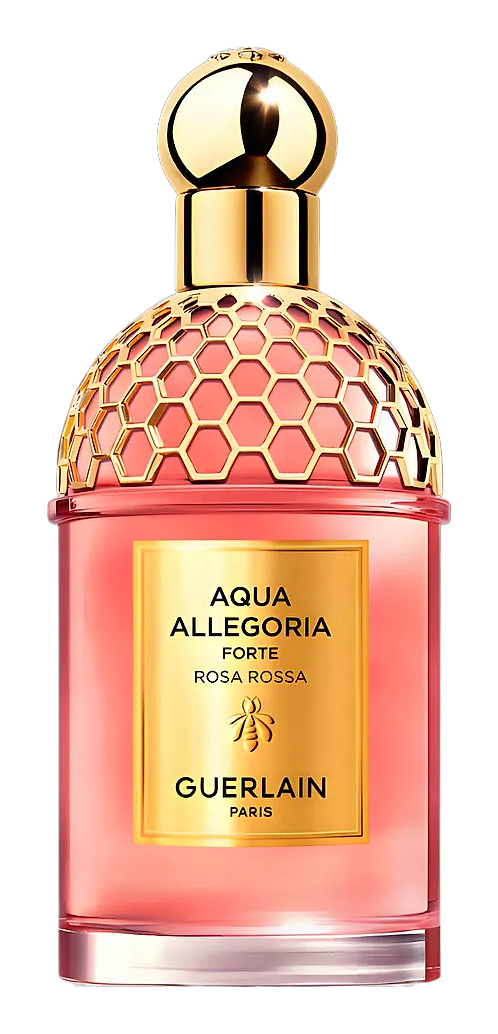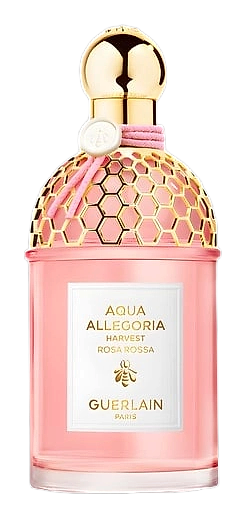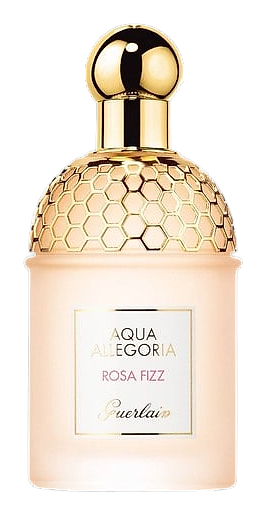

The Story
Why it exists.
The beginning
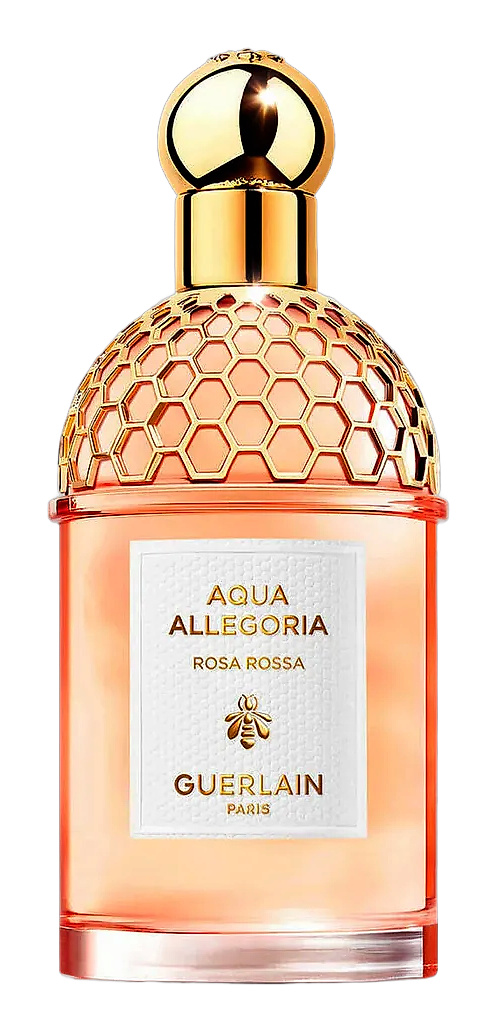
Thierry Wasser created Aqua Allegoria Rosa Rossa in 2018 as part of Guerlain's Aqua Allegoria collection, a line of fragrances designed to be worn freely, without ceremony. Rosa rossa translates to red rose, but Wasser aimed somewhere more alive. The name promises a flower. The brief was about what a rose does when it stops behaving. Fruity notes were the diversion, an excuse to get the rose somewhere unexpected. Wasser has spoken about his relationship with natural materials and the way Guerlain approaches each fragrance as its own story. Rosa rossa's story is about a rose that refuses to stay still.
The rose-peony-plum heart is where this fragrance earns its complexity. Where many rose fragrances commit fully to the floral and arrive easily soft, rosa rossa uses fruit notes as a structural element, the blackcurrant cuts sharpness into the opening, the plum adds weight beneath the petals, and the lychee arrives late as if to remind you the whole thing started with something fresh. The result is a rose you can smell for what it actually smells like, rather than what you expect a rose to smell like. The base keeps it grounded in Guerlain's signature powdery-musky warmth, but the real work happens earlier.
The evolution
It opens with a brisk tartness, blackcurrant and lychee, the kind of juiciness that reads almost effervescent. Nothing on your skin yet. Ten minutes in, it changes. The rose thickens and deepens into something less polite, plum arriving beneath it with dark, round sweetness. Peony lifts the whole thing clean. This is the surprise: rosa rossa doesn't stay delicate after the opening. The fruit-rose-peony combination has real presence, and it lasts longer than expected on skin, hanging close for 4-6 hours before the sandalwood and white musk settle into something powdery, close, intimate. Some reviewers describe the drydown as the best part. They're not wrong.
Cultural impact
The Aqua Allegoria line has become Guerlain's answer to the question of what a heritage house does for everyday wear, fragrances that carry the house's signature character without demanding a special occasion. Rosa rossa sits comfortably in that tradition while offering something with more character than most entry-level florals. The moderate sillage is a feature, not a limitation, the fragrance that exists near someone before they realize you're in the room, not one that announces your arrival across it.
The House
GuerlainGuerlain stands as one of the oldest and most revered perfume houses in the world, founded in Paris in 1828 by Pierre-François-Pascal Guerlain. What began as a boutique on rue de Rivoli quickly became the preferred destination for Parisian society, attracting dandies and elegant women who sought custom-crafted fragrances. The house's influence grew to such heights that Guerlain earned the title of Official Perfumer to Napoleon III after presenting Eau de Cologne Impériale to Empress Eugénie as a wedding gift in 1853. This royal patronage marked the beginning of Guerlain's enduring association with European aristocracy, as the house went on to create fragrances for Queen Victoria and Queen Isabella II of Spain. Today, under the creative direction of Thierry Wasser, the fifth-generation perfumer, Guerlain continues to shape the landscape of fine fragrance with a portfolio spanning over 1,100 olfactory creations. The house remains headquartered at its legendary Champs-Élysées mansion, a historic monument that anchors Guerlain's position at the intersection of heritage and contemporary luxury.
The Creator
Thierry WasserWasser gravitates toward green, crispy notes and the bold florals Guerlain is known for. Bulgarian rose appears repeatedly in his work, and he travels annually to oversee the harvest in Kazanlak.