
The Story
Why it exists.
The beginning
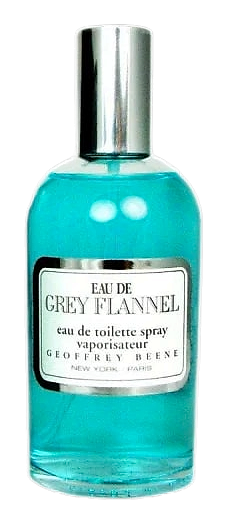
Eau De Grey Flannel arrived in 1997 as a reinterpretation of the house's landmark 1975 composition, designed to bring the Grey Flannel identity into a decade that valued freshness and restraint in equal measure. The original Grey Flannel had established Geoffrey Beene's menswear-through-perfumery philosophy, structure over ornamentation, confidence that doesn't shout, and this flanker applied that same sensibility to a lighter, greener register. Givaudan's brief was clear: translate the tailored ethos into something that could be worn daily without ceremony, at a price that didn't require justification.
What makes this composition interesting is its layered conifer structure. Cedar leaf leads the top, not bergamot, an unusual choice that signals immediately that this isn't playing by standard masculine fragrance rules. The star anise at the opening is a curiosity, lending a faint spiced edge that most wearers never consciously register but that stops the citrus from feeling generic. The eucalyptus-lavender pairing in the heart is quintessentially masculine in the old-school sense: herbal, slightly medicinal, resolved. The base of musk, sandalwood, and vetiver keeps everything grounded without sweetness.
The evolution
The opening hits sharp and immediate, lemon, mandarin, and cypress arrive together with a cool, almost metallic clarity. Cedar leaf persists longer than expected, adding a dry, woodsy backbone that prevents the citrus from fully dissipating. Within twenty minutes, the eucalyptus emerges, pushing the composition into herbal territory while the clary sage adds a faintly floral nuance that keeps the heart from reading as purely masculine-conventional. Patchouli arrives quietly in the base, lending earthiness beneath the musk and sandalwood. By the third hour, the fragrance has settled into a close, skin-hugging drydown, vetiver and woody notes keeping things dry, a whisper of musk that reads as clean rather than sweet. On fabric, it fades faster. On skin, it holds closer. The longevity data suggests four to six hours; in practice, the drydown phase often extends that on richer skin types.
Cultural impact
Eau De Grey Flannel occupies an interesting position in late-90s masculine perfumery, a period defined by aquatic declarations and synthetic freshness. Rather than chasing the category's loudest players, this composition doubled down on restraint, offering moderate sillage and a green, woody character that reads as tailored rather than trendy. The result is a fragrance that has outlasted many of its contemporaries, valued for its reliability rather than its drama. Wearers who return to it consistently describe it as the scent of someone who knows what they want, not because the fragrance shouts, but because it simply doesn't need to.