
The Story
Why it exists.
The beginning
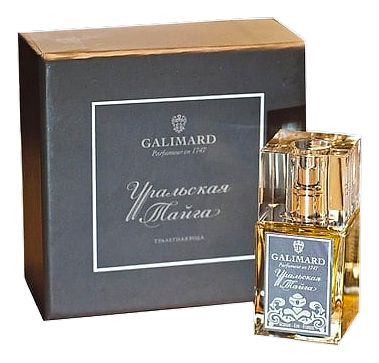
The name says it all. Uralskaya Taiga translates to Ural Taiga, the vast conifer forest belt that sweeps across the Ural Mountains into Siberia. In 2002, Jacques Morel set out to bottle that landscape. Not a postcard version. The real one. Galimard's collaboration with Boris Yeltsin gave the project a rare authenticity of intent. Morel reached for the evergreen and the green tea, the pine needle and the herb garden, and anchored them in oakmoss. The result doesn't smell like a forest experience. It smells like standing in one.
What makes this composition work is the tension between the green tea and the oakmoss. The tea softens what could be a clinical conifer affair, adding a quiet bitterness that reads almost mineral. The oakmoss, the single base note, does what oakmoss does in a true Chypre: it provides structure, depth, and a mossy earthiness that keeps the whole thing from floating away. Without sweetness to round the edges, the fragrance stays crisp and contemplative. The fern note in the heart gives a fern-like, slightly humid texture that suggests undergrowth rather than air. It's an unusual choice for a fragrance that opens with citrus and herbs, and it makes the composition feel more like a place than a concept.
The evolution
The opening announces itself quietly. Rosemary and bergamot arrive together, the lemon giving the green tea something to lift against. The conifer impression comes through in the air more than the ingredients themselves, like the memory of trees rather than a pine sol. Twenty minutes in, the pine and cedar take over the heart. The fern-like quality adds a slight humid texture, undergrowth rather than canopy. It's earthy, grounded, the kind of scent that makes you look around for a tree. The drydown is where oakmoss takes command. As the conifer notes recede, the mossy base deepens and lingers. This is the 2002 Chypre showing its bones. The structure holds. The green tea and fern notes persist, giving the drydown a meditative quality. On fabric, it breathes slowly. On skin, it lasts through the afternoon. The next day, there's a ghost of moss on the wrist.
Cultural impact
Uralskaya Taiga occupies a quiet corner of the aromatic fougère category. It's the kind of fragrance that collects devotees slowly, people who found it and never let go. The 2002 release predates the niche fragrance boom by a decade, and it shows in its restraint. No loud projection, no immediate impact. Just a quiet, persistent forest that stays close to the skin and lasts. For wearers drawn to green, conifer, and mossy notes, it functions as a reliable anchor in a landscape of louder options.