
The Story
Why it exists.
The beginning
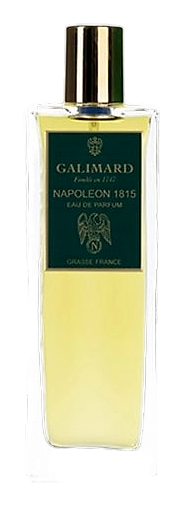
In March 1815, Emperor Napoleon passed through Grasse on his return from Elba. Two centuries later, Galimard commemorated that passage with a fragrance. Caroline de Boutiny designed Napoléon 1815 as a modern Mediterranean composition, citrus and pepper at the opening, a powerful heart of rose, patchouli, and jasmine, and a base of sandalwood, vetiver, and vanilla. The bicentennial was the occasion. The opening delivers mandarin and citron with an immediate brightness, while black pepper adds a clean heat that keeps the citrus from feeling superficial. As the citrus settles, the rose emerges bold and unapologetic, supported by jasmine's indolic warmth and patchouli's earthiness.
The rose doesn't wait for the drydown. It pushes through while the citrus is still settling, carrying patchouli's earthiness with it. That early floral-woody collision defines the fragrance's structure. The supporting materials, the vetiver, the sandalwood, keep everything grounded. The composition unfolds in distinct phases, each transition smooth and intentional. The jasmine threads through the rose, adding a subtle sweetness that balances the earthiness. The vanilla doesn't arrive until the end, and by then, the composition has earned its warmth.
The evolution
The opening hits immediately. Mandarin and citron, invigorating, direct, with black pepper lending a clean heat that keeps the citrus from being merely bright. Twenty minutes in, the rose arrives. It doesn't whisper. Paired with jasmine and patchouli, it reads earthy, almost mineral, and suddenly the fragrance has shifted register entirely. By the first hour, the citrus has receded and the heart owns the stage. The drydown is where sandalwood and vetiver take over, dry, woody, with vanilla slowly warming the edges. The rose's presence evolves from bold to a quieter supporting role as the base deepens. Each phase builds naturally on the last, creating a cohesive arc from opening to final moments on the skin.
Cultural impact
Released for the bicentennial of Napoleon's passage through Grasse, Napoléon 1815 occupies a specific cultural moment: heritage fragrance as memorial. It appeals to wearers who view scent as an archive of personal and collective memory. The composition itself, with its bold rose heart and Mediterranean citrus, stands out through its distinctive floral-woody tension that gives it a unique character. The fragrance divides opinion but earns loyalty from those who connect with its particular balance of citrus brightness, floral depth, and woody warmth.