
The Story
Why it exists.
The beginning
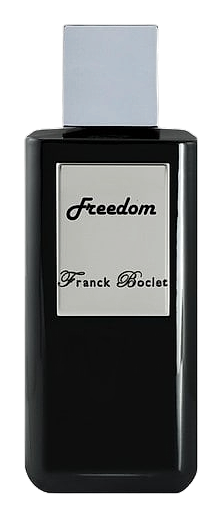
Franck Boclet released Freedom in 2019 as part of the Rock & Riot Black collection, a line that wears its influences openly. The fragrance draws its name and its spirit from an idea of freedom that has no interest in permission. Kurt Cobain once said that punk means musical freedom: doing and playing whatever you want. Freedom takes that philosophy as its brief. Boclet, a Parisian fashion designer who began his perfumery work in the early 2010s, built a collection where fragrances refuse to apologize for existing. Rock & Riot Black Freedom is the expression of that conviction, named for the independence that shaped a generation of music and distilled into a scent that asks nothing of the wearer except honesty.
What makes Freedom unusual is how it refuses to commit to a single register. The aromatic herbs and citrus suggest one kind of fragrance. The rum and passion fruit suggest another. The vanilla and white musk suggest a third. Freedom runs all three at once, and somehow holds together. The caraway in the top is the unexpected detail, a spice note that gives the fresh opening a slight edge, preventing it from reading as merely pleasant. Monoï bridges the transition from cool herbs to warm skin, connecting the phases rather than letting them feel like separate fragrances layered on top of each other.
The evolution
The opening hits fast, citrus brightness and herbaceous sharpness arriving together, the rosemary and basil asserting themselves within minutes. Mandarin and bergamot don't fight for dominance here. They share the stage. This fresh, green-electric phase lasts about an hour before rum and passion fruit push through. The transition isn't gentle. One moment you're in the herb garden; the next, you're somewhere warmer, with a tropical sweetness that's slightly boozy and entirely intentional. Monoï appears here as a bridge, carrying the warmth forward, preventing the heart from feeling like a different fragrance altogether. By hour 6, the herbs have mostly quieted. What remains is vanilla and white musk doing quiet, close work. The sillage doesn't disappear. It shrinks, becomes intimate, skin-adjacent, something that rewards proximity over projection. Freedom doesn't leave you. It just stops announcing itself.
Cultural impact
Freedom wears its 80s inspiration openly, the era that gave the Rock & Riot Black collection its emotional vocabulary. The fragrance doesn't invoke nostalgia; it translates the era's spirit of creative independence into something wearable. Boclet, known for building collections that challenge conventional fragrance categories, uses Freedom to argue that a scent named for liberation shouldn't smell like everything else.