The Story
Why it exists.
The beginning
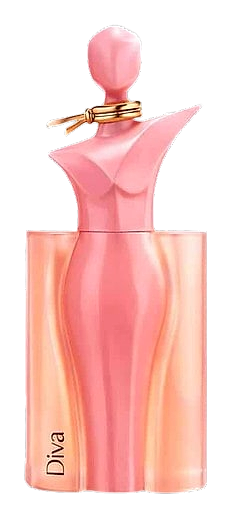
Jacques Polge created Diva in 1983 as Emanuel Ungaro's first fragrance, and the name says everything. Diva is not a suggestion. It is a declaration. The composition centers on rose, Ungaro's personal symbol, wrapped in warm spices, aldehydic brightness, and a base that holds close and animalic. Polge was building toward something maximalist here, unapologetic in its femininity and its confidence. The bottle, designed by Jacques Helleu, mirrors the curves of the female form, another Ungaro signature, another reason the fragrance doesn't apologize for taking up space.
What makes Diva structurally interesting is the aldehyde lift. These waxy, slightly soapy top notes keep the florals from going syrupy, they add air, a kind of cold-light quality that arrives before the warmth catches up. The heart is packed: rose, jasmine, ylang-ylang, carnation, orris root, and narcissus all pressed into service. Most fragrances would buckle under that much floral density. Diva handles it because the base holds everything: oakmoss and vetiver for structure, honey and vanilla for sweetness, civet for the animalic thread that runs through the entire composition like a whispered secret on warm skin.
The evolution
The opening hits bright and crisp, aldehydes first, then bergamot and mandarin cutting through. Cardamom arrives with its clean spice, coriander underneath providing lift. Within minutes the florals take over: Indian tuberose leading, ylang-ylang following close, Moroccan rose and jasmine filling every gap. The aldehydes don't disappear, they stick around, keeping the florals honest, preventing them from becoming sweetness alone. Three hours in, the carnation and orris root emerge as the quieter backbone of the heart. Then the drydown arrives and doesn't leave: vanilla, sandalwood, and civet settling into warm, intimate close-wear that holds for hours on skin. On fabric, it lingers into the next day.
Cultural impact
Diva built a loyal following on performance alone, strong projection, lasting presence, and a vintage character that newer releases rarely replicate. Wearers describe it as the fragrance of someone who walks into a room and doesn't need to announce themselves. The aldehyde-animalic warmth has kept it divisive in the best possible way: not a fragrance people are neutral about.