The Story
Why it exists.
The beginning
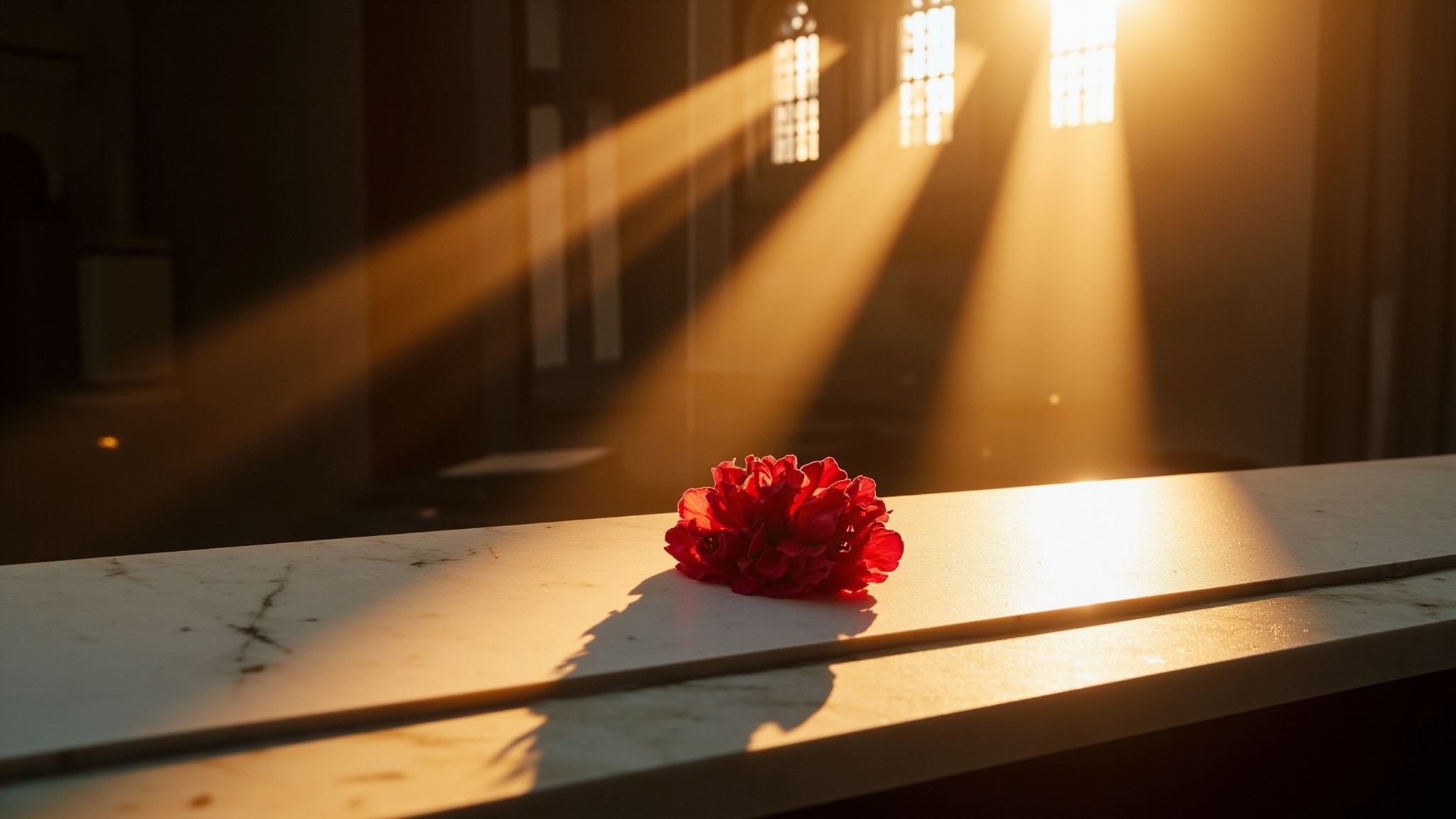
Chiesa d'Oro translates as Golden Church, and it earns the name. The fragrance takes its cue from the drawers of the sacristy in the Basilica di San Marco, a space where centuries of ritual have left their mark on wood and cloth. In Venice, spices arrived by sea from the East, handled by spezieri who mixed and measured them with ceremony before selling them in small packets. These same ingredients, valuable, almost oriental, found their way into cathedral rites, adding solemnity and preciousness to spaces already dense with gold mosaics. That accumulated weight translates into scent. Not a recreation of incense or candle wax. Something older and stranger: the smell of old wood, dried petals, and warm resin stored in the dark.
The carnation is the tell. It arrives after bergamot's brief citrus clarity and anchors the composition in spiced warmth that reads as almost medicinal, the kind of clove-adjacent heat that belongs in apothecaries as much as sacristies. Carnation has a reputation: it divides rooms. Here it's wielded without apology, supported by jasmine's creaminess and damask rose's quiet depth. The base does what bases do, extends, deepens, holds. But the real architecture is the heart, where the florals fold into spice and the spice folds into skin.
The evolution
The opening is bergamot's moment: bright, brief, almost astringent. It clears the air before carnation arrives with its characteristic spiced warmth, not harsh, but insistent. Jasmine and damask rose build quietly beneath, their sweetness tempered by the carnation's herbal edge. This middle phase is where the fragrance earns its name: the richness feels liturgical, ceremonial, like walking into a church that hasn't been ventilated in centuries but somehow doesn't feel stale. It feels alive. The drydown softens everything. Musk, amber, vetiver, tonka bean, vanilla, these hold close to skin, wrapping the wearer in warmth that projects without announcing. Vetiver's earthiness prevents the vanilla from becoming dessert. The musk keeps it human.
Cultural impact
Chiesa d'Oro occupies a specific space in the niche landscape: liturgical enough to feel singular, oriental enough to feel rich, floral enough to wear. Community ratings cluster around its longevity, above-average, with strong sillage that draws attention. What sets it apart is the carnation. It doesn't hide. It announces. Wearers either lean into that spiced strangeness or they don't. There's little middle ground, and that divisiveness is part of the appeal. The fragrance demands something from its audience, a willingness to embrace complexity and a certain boldness in scent.