
The Story
Why it exists.
The beginning
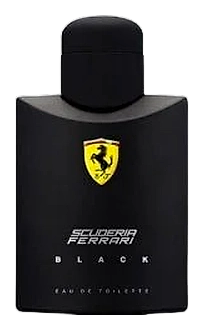
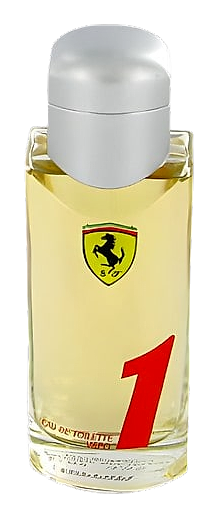
Ferrari launched its fragrance collection in 1999 with Ferrari Black, an oriental-woody statement that signaled the brand's intent to translate motorsport into scent. Ferrari No. 1 arrived in 2001 as the second chapter, a deliberate expansion of that initial vision. The brief was simple: take the precision, the earned velocity, the Italian craft that defined the cars and make it something you could wear every day. The name itself is a declaration, the first, the original, the one everything else follows.
What makes Ferrari No. 1 interesting is its structural tension. The citrus-conifer top is unapologetically sharp, fir resin gives it an almost aromatic, almost medicinal edge that reads more like a racing garage than a perfume counter. Beneath that, jasmine and nutmeg introduce warmth and spice, a deliberate counterweight to the cold open. The base, cedar, sandalwood, oakmoss, grounds everything in the classic Italian woody tradition. It's the synthetic-smoky-resinous character in the drydown that people either love or don't, and that ambiguity is built into the formula.
The evolution
The opening is immediate and arresting. Bergamot, lime, and mandarin orange arrive bright and clean, but the fir resin is the first thing that announces itself, sharp, green, almost coniferous in a way that stops this from being just another citrus fragrance. The citrus doesn't linger. Within the first hour, jasmine and nutmeg take over, adding warmth and a faint spice that softens the opening's sharp edges. This is where the fragrance pivots, from something that announces itself to something that settles close. The drydown is the long game. Cedar and sandalwood build slowly, oakmoss adding that classic mossy, slightly dirty depth that gives the base its character. Amber appears here too, giving the drydown a warmth that balances the green. This is where Ferrari No. 1 earns its reputation, the woody base lasts, moderate sillage means it stays close, but it stays interesting. On fabric, it can be detected the next morning.
Cultural impact
Ferrari No. 1 arrived in 2001 as the second chapter in a fragrance line built on the credibility of the prancing horse. It never achieved the broad recognition of later Scuderia flankers, but among those who know it, it holds a quiet cult status, a citrus-conifer fragrance that refuses to be polite. The synthetic-spicy character marks it as a product of its era, when masculine fragrances were not yet fully committed to the naturals-forward direction they would take in the following decade.