The Story
Why it exists.
The beginning
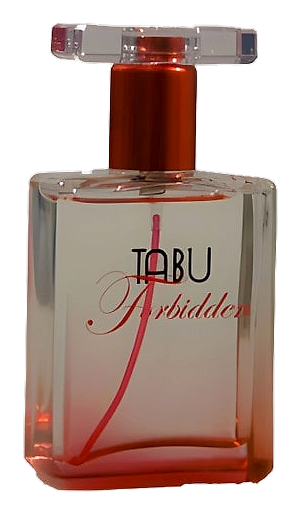
Tabu Forbidden arrived in 2008 as Dana's modern interpretation of the house's foundational fragrance. The original Tabu, launched in 1932, built its reputation on daring oriental sensuality. Forbidden takes that legacy and gives it a contemporary edge, leaning into the idea of black notes: black jasmine, black rose, black narcissus. These are the same floral families that defined the original, but here they operate in a different register. The jasmine opens with an almost waxy richness, the black rose brings a velvety depth that borders on syrupy, and the narcissus contributes a faint green edge that keeps the composition from becoming overly sweet. The result feels both familiar and distinctly new, a fragrance that acknowledges its lineage while charting its own course.
What makes the note structure unusual is the interplay between brightness and darkness. Mandarin orange opens the composition with clean citrus energy, it's the invitation. Then plum blossom shifts the tone toward something sweeter, almost edible. But jasmine doesn't enter softly. It arrives with presence, carrying the black rose and narcissus behind it. The narcissus is the unexpected note here: often used as a subtle supporting actor in floral compositions, it's given room to breathe alongside the jasmine. Vetiver grounds the base with its characteristic smoky-earthy quality, preventing the florals from floating into abstraction. Sandalwood adds warmth without sweetness.
The evolution
The opening hits bright and immediate. Mandarin orange arrives first, clean and citrus-forward, lasting roughly 20 minutes before the plum blossom adds its weight. The transition is not dramatic, it's a gradual deepening, the sweetness accumulating rather than replacing. By the 30-minute mark, jasmine and black rose dominate. This is the fragrance's statement period: heady, floral, confident. It holds here for two to three hours. The drydown begins around hour four. Vetiver and sandalwood emerge as the florals recede, creating a woody-musk warmth that stays close to the skin. The sillage softens noticeably as the woody notes settle, becoming more intimate and understated as time passes.
Cultural impact
Tabu Forbidden builds on a fragrance that made its mark decades ago. The original Tabu, introduced in the 1930s, established itself as a bold, sensual presence in the fragrance landscape. Over the years, it has maintained a loyal following among those who appreciate its distinctive character. The Forbidden variant takes this foundation and offers a modern interpretation that stays true to the original spirit while adapting to contemporary tastes. Wearers who appreciate the original Tabu will recognize the lineage, while newcomers will find a fragrance that speaks to modern sensibilities.