
The Story
Why it exists.
The beginning
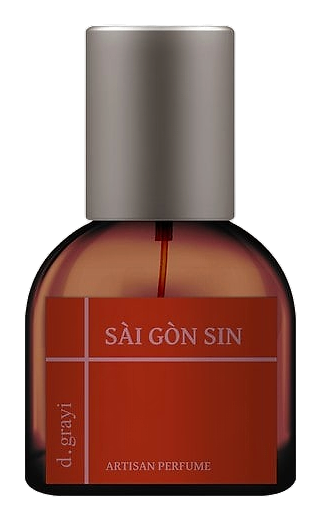
James Nguyen composed Saigon Sin in 2023 as a translation of Ho Chi Minh City into scent. The name itself, Sin, nods to the city's sensory chaos: the plastic-y, rubbery, and narcotic qualities that hit you the moment you step into the thick of it. Saigon Sin is the result, equal parts memory and material. The composition reads as an honest rendering of place, one that doesn't shy away from the synthetic register of modern Vietnamese street life. Nguyen built the fragrance from materials both natural and constructed, letting the artificial sit alongside the organic without privileging either. It's a portrait of a city where incense burns beside exhaust, where fruit vendors share pavement with vinyl-covered stalls, and where the sacred and the industrial share the same humid air.
What makes the composition unusual is the collision at the top. Rubber and plastic are rarely listed as fragrance notes, but Nguyen uses them deliberately, refusing to sand down the rougher edges of his materials. Buddha's hand citron and Saigon cinnamon cut through that synthetic register with brightness and heat, their sharpness pulling the composition somewhere warmer and more alive. The heart settles into frankincense, tobacco, and Fujian cypress, each note contributing its own texture to the mid-phase. Frankincense brings a dense, almost chewy presence.
The evolution
Rubber and plastic arrive sharp and almost industrial, undercut by citron's brightness. The opening reads as deliberately synthetic, a fragrance that refuses to apologize for its materials. Buddha's hand and Saigon cinnamon arrive quickly, sweet and almost narcotic, and the synthetic edge softens without disappearing entirely. Frankincense and tobacco take over as the composition settles, the frankincense carrying a heavy, resinous density that anchors the middle phase. Tobacco adds a dry warmth that feels almost ashy, a quiet burn rather than a full flame. Fujian cypress threads through the heart, wood without sweetness, its presence felt more as structure than as standalone note. The base reveals itself slowly: amber glows warm beneath, smoke stays present but never aggressive, and Vietnamese oud anchors the whole composition with something faintly animalic and deeply grounded.
Cultural impact
Saigon Sin sits within a growing catalogue of indie fragrances that treat unconventional synthetic materials as legitimate artistic choices. Nguyen's use of rubber and plastic as top notes isn't gimmickry; it's a refusal to edit the rougher textures of Vietnamese street life out of the composition. The fragrance treats materials most Western perfume houses would consider unusable as essential rather than incidental. Saigon Sin joins a small but notable group of scents that build their structures around Southeast Asian materials and memory, compositions that don't translate place into something more palatable for foreign markets.