
The Story
Why it exists.
The beginning
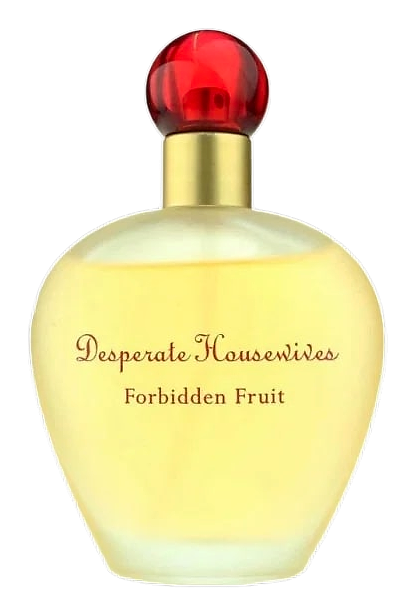
Coty's Forbidden Fruit arrived in 2006, tied to the Desperate Housewives brand. The licensing partnership gave Coty a specific subject to work with: the show's blend of suburban garden imagery and something just slightly off-key. The bottle was designed for the kind of bathroom shelf where it sits next to everyday grooming products and maybe a DVD box set or two. Forbidden Fruit translates that brief into scent, leaning into the show's central metaphor without overcomplicating it. The name points straight at temptation, at the things you crave when no one is watching. The composition builds around that tension: fruit and florals on the surface, warmer notes waiting underneath.
The note architecture draws from fruity-floral conventions of the early 2000s, but the execution here leans more botanical than bakery. Apple, peach, and orange blossom handle the bright opening, a combination that reads as fresh-cut and sweet without veering into tropical punch territory. The fruit reads crisp rather than candied, with peach softening the apple's sharper edges and orange blossom threading a gentle honeyed warmth through the top. The heart moves into white florals.
The evolution
The first fifteen minutes are all fruit. Apple takes the lead, bright and sweet rather than tart, with peach rounding out the edges and orange blossom lending a faintly honeyed lift. There's a synthetic-fruity quality here that reads very mid-2000s, the kind of sweetness that feels constructed rather than grown, and it works precisely because it doesn't pretend otherwise. The opening doesn't try to mimic fresh-picked orchard fruit. It aims for the brighter, more processed sweetness of fruit-flavored candy and air freshener, and lands there with confidence. The alcohol burn fades within a minute or two, leaving the fruit notes suspended in a slightly soapy, slightly sugary cloud that smells like the inside of a cosmetics bag. Around the thirty-minute mark the florals take over.
Cultural impact
Forbidden Fruit sits within the broader category of celebrity and television-tied fragrances that saw significant expansion in the early-to-mid 2000s. The scent was developed as part of the Desperate Housewives brand extension, translating the show's visual identity into a wearable product. The fragrance takes the show's themes of suburban domesticity and underlying tension and renders them in olfactory terms. The bright fruit opening suggests the polished exterior of suburban life, while the warmer base hints at the secrets and desires that drive the show's narrative. It's a direct translation of the show's central metaphor into scent.