The Story
Why it exists.
The beginning
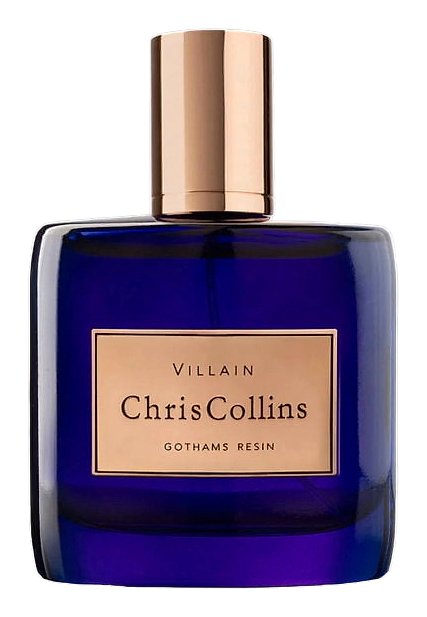
Villain arrived in 2026 as part of Chris Collins' Sapphire Collection, and the name does the heavy lifting. Chris Collins designed the line to capture feelings of attraction, daring, and freedom, with personal storytelling woven through each release. Villain reads like a chapter about the version of yourself that arrives late, says less, and somehow owns the room anyway. The scent leans into contrast from the jump. Grapefruit and rhubarb bring brightness and a tart edge. Smoked thyme and pink pepper add heat and a flicker of something restless. It wears composed on the surface with something unresolved underneath, the olfactory equivalent of a calm expression that gives nothing away.
What makes Villain interesting is the tension between its green and resinous halves. Galbanum and artemisia lend a raw, almost-bitter greenery, while ylang-ylang adds a creamy, almost sun-warmed counterweight. The base is where Collins commits: Akigalawood sits alongside tobacco, vetiver, and myrrh. The interplay between the green opening and the resinous base gives the composition its shape. As the hours pass, the galbanum retreats and the tobacco and myrrh come forward, settling into something warm and slightly meditative.
The evolution
The first 30 minutes are bright and almost aggressive. Grapefruit cuts through, rhubarb adds a fruity tartness, and smoked thyme brings the herb garden into focus. Pink pepper flickers underneath like static. It smells like someone cracked a window in a room full of incense. Around the two-hour mark, the green sharpens. Galbanum takes over with that bitter, resinous snap, and artemisia keeps things cool and slightly medicinal. Ylang-ylang blooms quietly underneath, adding a creamy softness that keeps the heart from feeling too austere. This is the phase where Villain feels most itself: composed, complex, a little aloof. The drydown is where it gets warm. Tobacco and myrrh settle in around the 4-hour mark, with vetiver grounding everything in dry earth. Akigalawood adds a subtle spiciness that lingers on skin like the memory of a cigarette smoked an hour ago. By hour six, it's mostly skin-close: soft resins, faint tobacco, a trace of citrus still hanging on. The next morning, a shirt collar still carries the ghost of myrrh and vetiver.
Cultural impact
Villain leans into contradiction: green and smoky, bright and brooding, built around Akigalawood alongside tobacco and myrrh in the drydown. That particular combination of materials places it in a recognizable space among contemporary resinous compositions. The inclusion of Akigalawood alongside more traditional naturals like tobacco, vetiver, and myrrh gives the scent a dual character, part modern molecule, part classic apothecary. The tobacco-myrrh drydown carries an almost meditative weight, lingering close to the skin for hours and shifting slowly as the day wears on.