
The Story
Why it exists.
The beginning
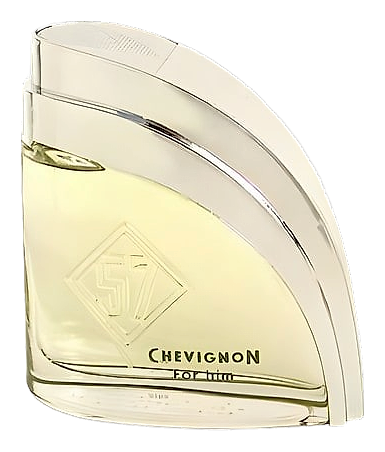
Chevignon built its name on workwear, denim jackets, leather belts, the iconic French vest. In 1999, the house released Chevignon 57 for Him, an Eau de Toilette that treated scent like a wearable accessory. No fuss. No performance art. Just a fragrance that fit the brand's DNA as neatly as a well-cut jacket. The '57' refers to a specific Chevignon archive piece, a nod to the utilitarian heritage that runs through every release. It was designed to be identifiable at a glance, the fragrance equivalent of a trusted tag on a collar.
What makes 57 for Him interesting is its restraint. The note pyramid is lean, nine materials across three tiers, but each one earns its place. The top trio of cardamom, mint, and lemon creates an immediate, uncomplicated freshness. Then the heart shifts register: violet leaf brings a green, slightly metallic cool that contrasts with the orange blossom's quiet floral sweetness. Cedar bridges heart and base, carrying that dry wood into the drydown where patchouli and musk add depth without weight. It's a composition that trusts simplicity.
The evolution
The opening hits sharp and brief, lemon zest, a mint breeze, cardamom warmth that dissipates within minutes. Within ten minutes, violet leaf takes over, and the fragrance becomes cooler, greener, almost ozonic. The orange blossom emerges quietly in the heart, lending a softness that prevents it from reading as harsh. Cedar announces itself around the 30-minute mark and becomes the dominant thread. By hour two, the fragrance has settled into its final form: cedar, patchouli, and musk in close formation, projecting just enough to be noticed by someone standing beside you but never across the room. The violet note resurfaces in the late drydown as a faint powdery trail. On fabric, it holds longer than on skin, the musk and cedar embed themselves in cotton and stay into the evening.
Cultural impact
Chevignon 57 for Him arrived during a pivotal era for fashion-house fragrances in the late 1990s, when brands sought to extend their identity beyond clothing into lifestyle products. The fragrance reflected Chevignon's roots in American workwear aesthetics adapted for French style, emphasizing utilitarian heritage, denim, leather, and sturdy vests. This EDT represented a deliberate move to democratize fashion-house appeal for a younger demographic seeking accessible luxury. The aromatic-green profile with citrus-mint opening resonated with the era's preference for clean, confident scents over heavyorientals.