The Story
Why it exists.
The beginning
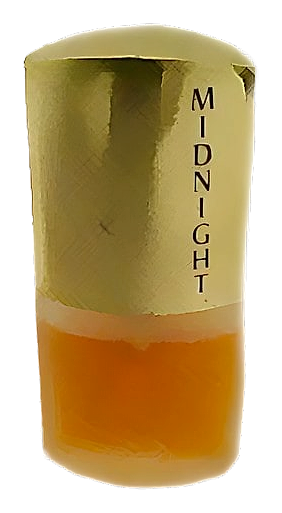
Charles of the Ritz launched Enjoli in 1978 as a daytime signature, confident, polished, built for the professional woman who taught herself elegance rather than inheriting it. By 1984, the brand extended that idea into evening wear. Enjoli Midnight arrived as the night chapter: warmer, spicier, more deliberately intimate. The same woman, but after the office closed. Where the original Enjoli projected into a room, Midnight pulls inward. The name says as much, it belongs to the hours when the performance drops and the personality deepens. Aldehydes, amber, and vanilla as the structural spine. The 1984 release joined a crowded women's fragrance market, but its positioning was precise: not power-scent, not abstract sensuality. Something in between that felt earned rather than performed.
Aldehydes are the structural oddity here, they give the opening its champagne lift, that fizzy brightness that cuts through the sweetness before it arrives. In 1984, aldehydic florals had been a signature move since Chanel No. 5 decades earlier, but Enjoli Midnight deploys them against a warmer, spicier backdrop rather than the abstract powder of its predecessors. The heart pairs jasmine and ylang-ylang, classic white florals, with cinnamon and patchouli. That patchouli is the clue: it anchors the florals in earth rather than air. The base builds around vanilla and benzoin for warmth, labdanum and frankincense for resinous depth, and musk for the skin-close finish. The fragrance's architecture rewards patience.
The evolution
The opening is all aldehydes, the bright, effervescent kind that make the first spray feel like a glass of something sparkling raised in a dimly lit room. Mandarin and bay leaf add a citrus snap and a green herbal edge beneath the fizz. Fruity notes pulse faintly, adding sweetness without defining the shape. This phase holds for roughly twenty minutes before the aldehydes begin their slow surrender. The heart takes over gradually. Jasmine and ylang-ylang arrive together, rich and white-floral, but they're not alone. Cinnamon brings a warmth that keeps the florals from floating too far from skin. Patchouli and sandalwood add weight, earthy, slightly smoky, undeniably 1980s in their fullness. Rose lingers at the edges. This is the fragrance's most complex phase, layered and sustained, lasting several hours before the florals fully recede. The drydown arrives quietly. Jasmine finally steps back. Vanilla and benzoin emerge as the dominant warmth, softening everything that came before. Labdanum adds a faint resinous note, frankincense a whisper of something ancient.
Cultural impact
Enjoli Midnight arrived in 1984 as the evening counterpart to the original Enjoli, a warmer, spicier, more deliberately intimate follow-up to the daytime signature. While other women's fragrances of the mid-80s chased projection and sillage, this one drew inward. The aldehydes, amber, and vanilla structure pointed toward a richer, more resinous direction that evening wear would fully embrace later in the decade. The fragrance found its audience among women who wanted something with depth rather than volume, close, warm, and quietly persistent rather than announced.