
The Story
Why it exists.
The beginning
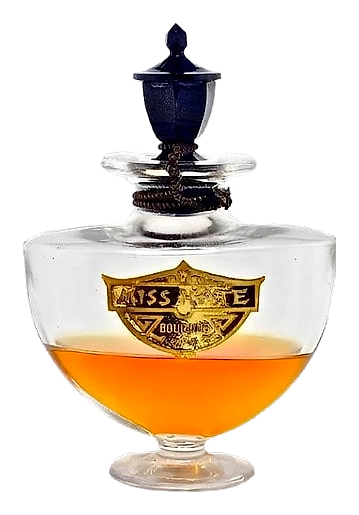
Miss Kate arrived in 1922 from a Parisian house, and it was one of the earliest fragrances to bear the Bourjois name. The composition leans into a set of materials that feel almost startling for a women's launch of the period: rum, leather, tobacco, and vanilla, notes that carry weight and darkness rather than the bright florals that dominated the era. From the first spray, there's a rum sweetness wrapped in smoke, dense and grounded, already settled into itself before the bottle leaves your hand. The tobacco arrives underneath, dry and slightly bitter, anchoring the sweetness so it never tips into confection. Leather runs through the middle, not sharp or new but soft, the kind of leather that remembers being touched.
What's worth noticing is how the notes interact. Rum and vanilla share a sweetness, but the rum brings a fermented, almost boozy edge while the vanilla smooths it into something edible and familiar. Tobacco and leather have a natural kinship, both animalic, both carrying that sense of something handled and worn, and in Miss Kate they reinforce each other so the drydown never loses its depth. The smoke ties them all together, a thin thread that runs from the first impression to the last, never heavy enough to dominate but always present, giving the composition its sense of cohesion.
The evolution
The opening wears like rum poured over brown sugar, sweet and slightly fermented, with a smoke that doesn't announce itself so much as settle around you. The rum is warm, boozy, almost liquid, wrapping into the tobacco almost immediately so the two become hard to separate. Leather arrives and softens the edges, not sharp or new but lived-in, the kind of leather that holds warmth. Tobacco builds underneath, dry and dark, giving the composition a bitter backbone that keeps the sweetness in check. As the wear progresses, the smoke begins to thin, and the vanilla steps forward, rounding out the rum and tobacco into something warmer, almost edible, like the last trace of a dessert that's been sitting on a table. The vanilla-tobacco combination carries through the middle phase, sweet and dry at the same time, neither overwhelming the other.
Cultural impact
Miss Kate arrived in 1922, and it represents an early entry in the Bourjois fragrance catalogue, a women's composition built on rum, leather, tobacco, and vanilla rather than the floral structures that dominated the period. Its approach to women's scent, dense, warm, and unapologetically smoky, set it apart from many of its contemporaries. The fragrance is no longer in production, which makes surviving bottles a point of interest for those who encounter them.