The Story
Why it exists.
The beginning
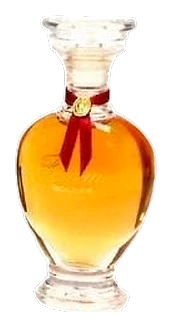
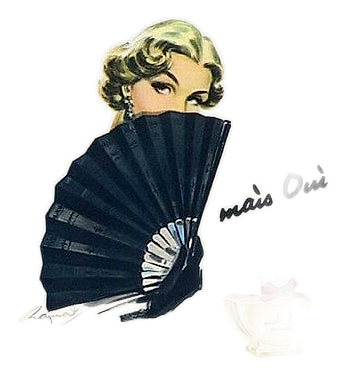
Constantin Weriguine created Mais Oui in 1938 for Bourjois, a house built on Parisian theatrical flair and accessible luxury since the late 19th century. The name itself is a delighted French exclamation, Mais Oui!, the verbal equivalent of throwing your hands up in agreeable surprise. By 1938, Bourjois had been investing heavily in perfume development, and Mais Oui arrived as the house's statement piece: an animal-floral chypre with real backbone. Weriguine chose a composition that balanced showmanship with intimacy. The aldehydes provided sparkle and sophistication, the prevailing language of the era, while the animalic heart of civet and costus gave the fragrance something unexpected. It wasn't merely beautiful. It purred.
The combination of civet and costus is unusual, and it aged this fragrance in ways that keep it divisive today. Costus, in particular, carries a faintly urinous, animalic character that modern perfumery largely moved away from. In 1938, it was simply part of the palette, another material with its own voice. Here, blended with honey and styrax, it creates a warmth that reads as almost intimate. Almost skin. The aldehydes anchor the florals, jasmine and rose, keeping them from becoming precious. This isn't a bouquet. It's a conversation between the garden and the animalic warmth beneath it, moderated by oakmoss and tonka bean.
The evolution
The aldehydes hit first, bright, sparkling, a little electric. Rose arrives quickly, floating above the composition like a veil. Then the jasmine emerges, indolic and warm, and the honey begins to pool. This is where the civet makes itself known: not as a shock, but as a slow, humming warmth that sits close to the skin. Over the next few hours, the cedar thickens. Costus and styrax add depth, resinous and animalic, and the oakmoss grounds everything in that dark, mossy character that defines the chypre family. The drydown is intimate by design, tonka bean and musk soften the edges, leaving something that smells like warm skin, like the memory of a room someone just left. On fabric, the longevity extends considerably. On skin, expect the base to linger for hours, quieter but persistent.
Cultural impact
Mais Oui has outlasted most of its contemporaries, remaining a collector's item and a cult curiosity for vintage fragrance enthusiasts. The New Yorker noted in 1942 that it was a favorite among those who liked "gaiety with their sex appeal", a description that still holds. It's not a safe fragrance. The civet, the costus, the oakmoss, these are materials that divide opinion. But for those who lean in, it's a glimpse into an era when perfumers had fewer restrictions and more nerve.