The Story
Why it exists.
The beginning
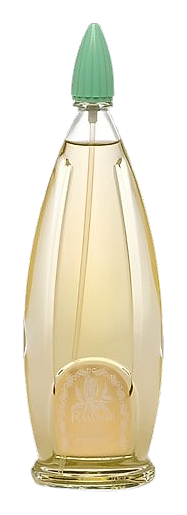
Henri Robert and Constantin Weriguine created Ramage in 1950 for Bourjois. The brief was simple on paper: a chypre with real staying power. What they delivered was something with more nerve than that. The aldehydes give Ramage an immediate coolness that reads almost metallic before the composition warms, settling into a waxy, powdery embrace as the heart notes unfurl. The jasmine emerges slowly beneath this luminous top layer, adding a sweet, indolic depth that tempers the brightness without dimming it. Finding it now feels less like a purchase and more like a discovery. It was discontinued decades ago, but the formulation retains that mid-century confidence, an era when perfumers weren't afraid to make something that demanded attention rather than whispering for it.
The note structure is deceptive. On paper it's aldehydes, jasmine, moss, vetiver, simple enough. But Ramage isn't a floral dressed in aldehydes. The jasmine is almost buried, kept subordinate to the moss, which dominates the heart in a way few modern chypres attempt. That moss is damp, green, slightly bitter, the kind that smells like forest floor, not perfumery convention. The vetiver in the base does the quiet heavy lifting, keeping everything earthbound as the aldehydes eventually fade. It's a composition that earns every one of its four notes and doesn't need a fifth to feel complete.
The evolution
The aldehydes arrive first, bright, clean, slightly soapy. Thirty seconds in, they're still commanding attention, but the jasmine is already threading through, sweet and indolic beneath the waxy shimmer. By the ten-minute mark, the moss takes over. Not the delicate moss of modern florals, but something dense and green, almost vegetal. Vetiver settles beneath it all, dry and root-like, holding the structure steady. The aldehydes never fully disappear, they soften into a powdery warmth that persists through the drydown, becoming a soft whisper beneath the moss and vetiver foundation. On skin, the fragrance evolves steadily over hours, the jasmine retreating as the base notes assert their presence. The next morning, vetiver and that faint mossy residue linger on fabric, a reminder of the composition's architectural ambition.
Cultural impact
Ramage sits comfortably in the lineage of Bourjois scents that prioritize character over caution. The aldehydic-mossy combination places it squarely in the chypre tradition, a family of fragrances defined by their structured interplay of brightness and earthiness. For those exploring vintage compositions, Ramage is a quiet discovery, a chance to experience how perfumers once approached fragrance construction with boldness and patience. The aldehydes bring a luminous quality that modern formulations often shy away from, while the moss provides the depth that gives chypres their name and their staying power.