The Story
Why it exists.
The beginning
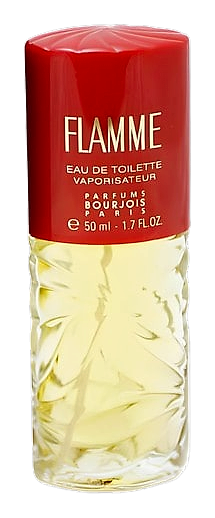
Flamme arrived in 1932, designed by Jacques Polge during his early years at Bourjois. The brief was clear: translate the aldehydic language of Parisian high perfumery into something with more green in its voice. Less powder, more living garden. Polge reached for hyacinth, a note rarely centre-stage in 1932, and anchored it with lavender and geranium, herbs that smelled of Provencal fields rather than powder compacts. The result was an aldehydic floral that breathed differently from its contemporaries. Oakmoss and patchouli formed the base: woody, earthy, dry. Not a gentle fragrance. A decisive one. Flamme launched quietly alongside Bourjois's broader push into scent as a core pillar, joining a house that had been building toward fragrance since Mon Parfum in 1924.
The aldehydic structure is the point. Introduced to Western perfumery around 1920, aldehydes added a kind of sparkle, waxy, luminous, lifted, that changed what florals could do. Flamme uses them not to amplify sweetness but to lift hyacinth and bergamot into something bright and immediate. The heart shifts the register entirely: lavender and geranium are herbal, slightly cool, almost medicinal in the best way. They stop the aldehydes from becoming powder and give the fragrance its unusual character. The base, oakmoss, patchouli, vetiver, sandalwood, amber, lands earthy and close. Tonka bean adds a whisper of warmth without softening the edges.
The evolution
The opening is all aldehydes and hyacinth. Bright. Almost sparkling. Bergamot threads through, adding citrus lift. Ten minutes in, the herbal heart arrives, lavender and geranium together, cooler than the top, more grounded. This is the tell. That's the part that separates Flamme from its sweeter aldehydic cousins. By the second hour, the base begins its slow arrival: oakmoss first, then patchouli and vetiver pulling the fragrance toward earth. Sandalwood smooths the edges. Amber and tonka bean add warmth, but this never becomes a warm skin scent. It stays close, intimate, present. The drydown lingers for hours, not projecting, not fading, just there. On dry skin, the opening can read sharper. On normal skin, it opens like the first paragraph of a good novel: confident, clear, worth your time.
Cultural impact
Flamme arrived in 1932 as Bourjois staked its future on fragrance, a period when the house was pivoting from cosmetics toward scent as a cultural force. The aldehydic trend had exploded with Chanel No. 5 three years prior, and Flamme joined a wave of aldehydic-florals that defined interwar perfumery. Its blend of bright aldehyde sparkle, herbal lavender-geranium heart, and earthy oakmoss base captured the tension between Art Deco glamour and the grounded, practical mood of the Depression era. Unlike many contemporaries, Flamme avoided heavy sweetness, instead offering a drier, more complex profile that signaled sophistication without excess.