
The Story
Why it exists.
The beginning
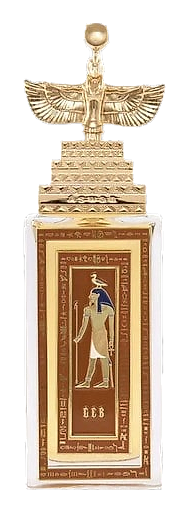
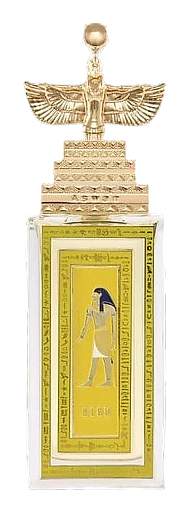
Atum takes its name from the creator god of the Heliopolitan Ennead, the deity ancient Egyptian myth credits with conjuring everything from nothing. Not a war god, not a trickster. The first mover. The one who thought the world into existence while the Nile was still finding its course. Aswan has built its whole collection around translating these primordial forces into scent, with each fragrance carrying the weight of a named deity. Atum sits at the conceptual root of that idea. Perfumer Ibrahim Al-Zoubi composed it for the year's lightest hours: not incense and stone, but the moment after rain hits warm cedar. On skin, the opening is a clean burst of fig leaf and mandarin, the kind of green sweetness that catches light rather than throws it.
What's interesting here is the restraint. For a fragrance named after the creator of everything, the composition holds itself to a narrow frame. No fireworks, no oud bomb, no smoke signal. Iso E Super, Ambroxan, and Cashmeran do the heavy structural lifting beneath the listed notes, lending the whole composition a velvety, transparent quality. The fig and mandarin add just enough pulp to keep the woods from feeling clinical. The cypress and iris keep the molecule base from collapsing into pure abstract clean.
The evolution
Atum opens with a bright burst of mandarin and the milky green sweetness of fig, the citrus lifting within minutes as the fig settles into a softer fruit-skin warmth. By the 20-minute mark, cypress sharpens the edges and iris introduces a powdery violet haze that fills out the heart. In the drydown, the modern molecule base of Iso E Super, Ambroxan, and Cashmeran takes over, leaving a clean woody-amber musk that clings close to skin for the rest of the wear.
Cultural impact
The Atum concept draws on the creator-god mythology, lending the fragrance a conceptual weight that goes beyond simple scent. Wearers describe it as the fragrance equivalent of a perfectly sun-faded linen shirt: clean, soft, and just relaxed enough to feel lived-in. There's a quality of stillness to it that matches its mythological namesake. The opening fig and mandarin give it a brief moment of brightness before the iris and woods take over, settling into a drydown that reads close to clean skin rather than anything overtly perfumey.
The House
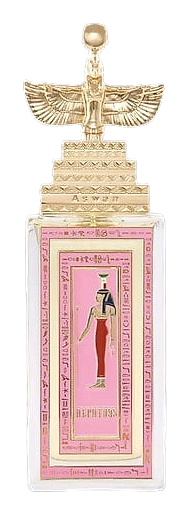
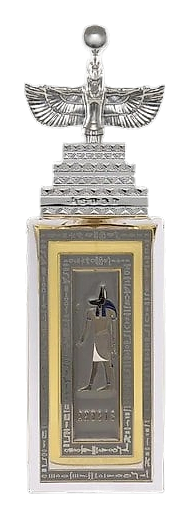
AswanAswan is a Swedish niche fragrance house that channels ancient Egyptian mythology into liquid form. Each scent takes its name from a deity, distilling the elemental forces of creation, air, earth, water, fire, and sky into highly concentrated extrait de parfums. The brand operates from Emmaboda, Sweden, under PANA DORA SWEDEN, and crafts fragrances that function as olfactory portals to antiquity.
The Creator
Ibrahim Al-ZoubiAl‑Zoubi favors natural extracts that retain their original character. He often begins with a base of oud, ambergris, or sandalwood, then layers bright citrus or herbal notes to create contrast.