The Story
Why it exists.
The beginning
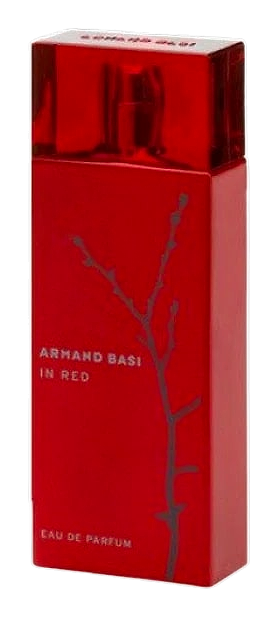
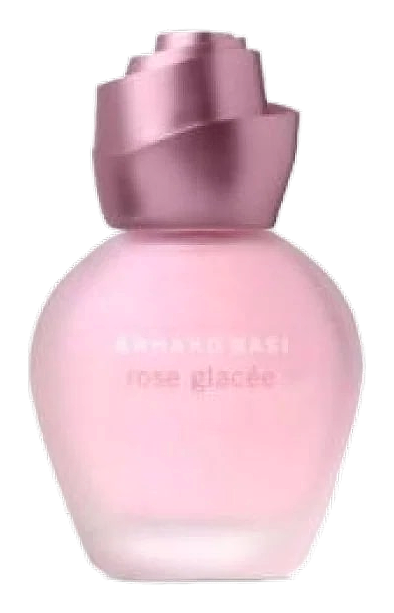
Françoise Caron composed Rose Glacée for Armand Basi in 2011. The composition leans into contrast, placing cold fruit against warm skin and presenting a rose chilled until it sharpens into something almost mineral at the edges. Armand Basi, a Spanish house, extends into cooler territory with this release, and the gesture feels intentional, a study in how floral forms shift when you pull the temperature down. The bottle carries a red rose on a pale field, a visual cue that mirrors the tension between warmth and frost that runs through the juice itself. Caron, known for a certain textural restraint in her work, builds the fragrance around the push and pull of opposing temperatures.
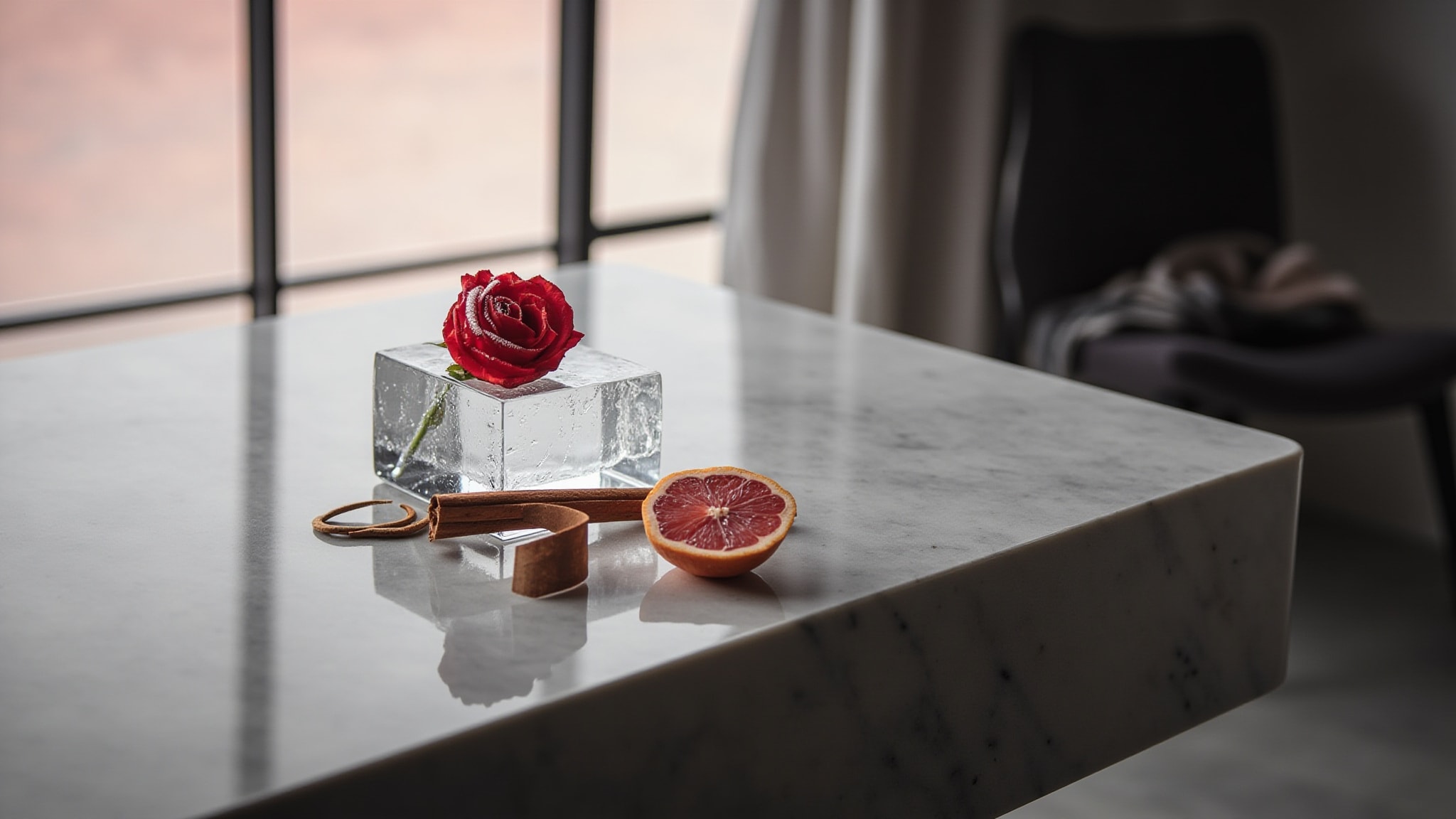
What separates Rose Glacée from the floral-fruity crowd is the structural tension Caron wired into the pyramid. Grapefruit, lemon, and green apple read bright and cold at the top, but the heart stages cinnamon against tea rose, a pairing that creates friction rather than comfort. The base finishes with amber and crystal musk, which is where the smoky accord sneaks in. That blend of crystalline fruit and incense-tinged warmth gives it range. It is floral, yes, but it does not sit politely in the floral aisle. It borrows the flicker from spiced compositions without losing its fruit forward personality.
The evolution
The first fifteen minutes belong to citrus. Grapefruit leads, sharp enough to register on cold skin, and the green apple underneath adds a tart, almost mineral edge. The lemon glues them together, bright but not sour. Then something shifts. The cinnamon arrives earlier than expected, and the rose steps forward not as a bouquet but as a single petal, cold and slightly camphorous. Peach nectar rounds the edges for a brief window, adding skin-warm sweetness before the base takes over. By the second hour, the smoke registers. Amber and woody notes close in, and the crystal musk settles. The trail goes soft, the sillage contracts, and what remains is a cool, slightly sweet, faintly smoky whisper close to the skin. The rose continues to anchor the composition through the mid-phase, but it takes on a quieter, more translucent quality as the woods and amber take over.
Cultural impact
Rose Glacée offers a profile that reads as transitional-weather rather than spring-garden, with a mineral, almost icy opening that cools the fruit before the heart blooms. The rose at its center stays lean and slightly camphorous, edged with cinnamon and warmed briefly by peach nectar, but the overall impression leans tart rather than syrupy. The smoky undertow from amber and woody notes keeps the composition from drifting into sweetness, and the crystal musk at the base settles everything into a cool, faintly smoky close.