
The Story
Why it exists.
The beginning
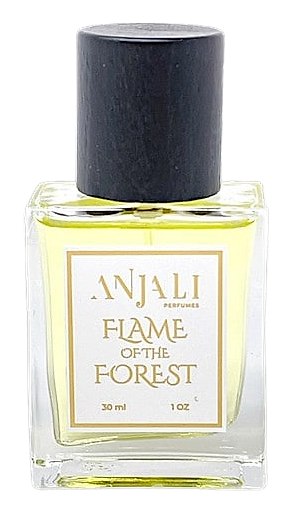
The Flame of the Forest conjures an image of a forest catching fire: flowers coat every branch before the leaves return, turning whole hillsides into something from another climate zone. The idea was to translate this into scent, not the flowers alone, not the wood alone, but the whole violent calendar of the thing. The bloom, the char, the bare branch afterward. That's what this fragrance captures.
Most fragrances pick a cedar and stay loyal, one species, one origin, consistent throughout. Flame of the Forest uses two: Texas cedar in the top, Himalayan cedar in the heart. The Texas cedar arrives crisp and almost piney, lending the opening its green-wood bite. The Himalayan cedar that follows is denser, darker, more resinous. The rose water and saffron in the heart add an unexpected softness, a floral counterargument to all that bare wood. It's the breath between the flame and the ash.
The evolution
The opening hits bright. Bay leaf and pink pepper, the spice is immediate, almost startling on first spray. Then the cedar arrives and the structure settles into its woody core. Twenty minutes in, the champaca and rose water emerge. Soft, almost watery florals sitting inside a composition that started sharp and dry. The contrast doesn't fight, it harmonizes. Three hours in, the ambergris appears. More like the warmth of skin, close and particular. The teakwood anchors everything below it. By hour five or six, you're in drydown: the smoke has dissipated, the florals have faded, and what's left is ambergris and teakwood close to the skin. The kind of scent that someone near you might catch when you lean in to speak.
Cultural impact
Niche fragrance with cultural specificity at its core, named for a tree associated with dramatic seasonal transformation. The pairing of woody structure with floral softness creates something that occupies its own space. Moderate sillage makes it a personal fragrance in a market where niche often means projection.