
The Story
Why it exists.
The beginning
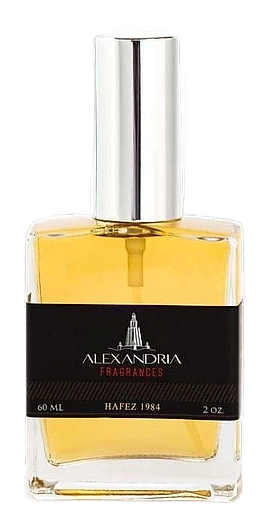
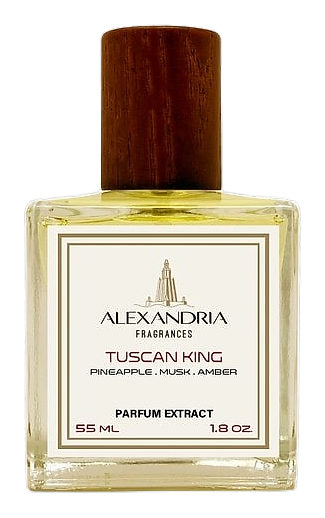
Tuscan King arrived in 2019 as Alexandria Fragrances' answer to a specific question: what happens when you fuse the two most-discussed fragrances in the collector world into something that stands on its own? The brief was straightforward, raspberry, leather, pineapple, smoky birch, and Hany Hafez built the composition around that contrast. No mythology, no invented inspiration. Just a name that names a place, and a scent that earns the crown.
The note structure is deceptively simple. Pineapple and birch open, leather and suede follow, amber and musk close. The trick is in the execution: the pineapple here isn't bright or aquatic, it's roasted, almost dark, which gives the smoky birch something to play against rather than compete with. The leather doesn't arrive politely mid-drydown. It pushes in around the thirty-minute mark and stays. That's where most clones of Tuscan Leather stumble; Hafez didn't.
The evolution
The opening is the loudest moment. Pineapple hits first, juicy and thick, with birch smoke threading underneath like a warning shot. By the ten-minute mark the fruit begins to recede and suede surfaces, soft, warm, almost powdery against the smoke. Leather arrives around twenty minutes and establishes itself as the dominant voice. The raspberry becomes a memory of sweetness rather than a presence. Around hour three, ambergris and musk move in, smoothing the edges, turning the leather into something skin-close. The final drydown, hour six through eight, is amber-warm skin. Not projection anymore, just presence. The kind that lingers on a collar after you've already left the room.
Cultural impact
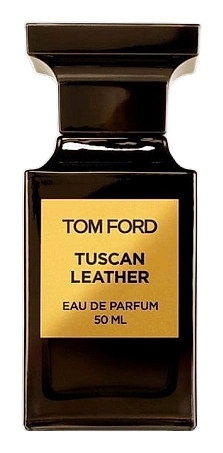
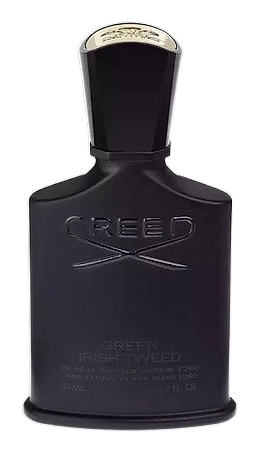
Alexandria Fragrances built its catalog around recreating high-ambition accords for accessible prices. Tuscan King, drawing explicitly from Creed Aventus and Tom Ford Tuscan Leather, sits at the intersection of two of the most discussed collector fragrances on the market. The comparison is intentional and the community knows it. What separates Tuscan King from the broader dupe conversation is that Hafez layered the two references rather than simply approximating one. That ambition earns it a different kind of attention.