The Story
Why it exists.
The beginning
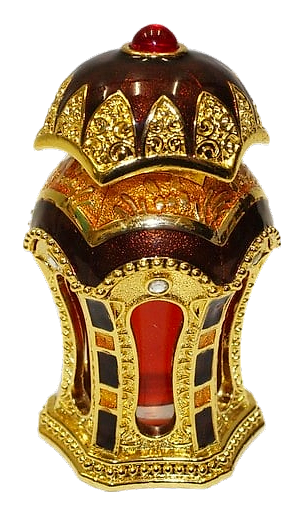
Rafia Gold was conceived as an invitation into the Al Haramain world, a concentrated parfum oil that distills the house's signature oriental warmth into something intimate and portable. The name itself suggests something precious and sunlit, a golden hour bottled. What follows is an aldehydic rose wrapped in warm woods, designed to linger close to the skin and unfold over hours rather than announce itself across a room.
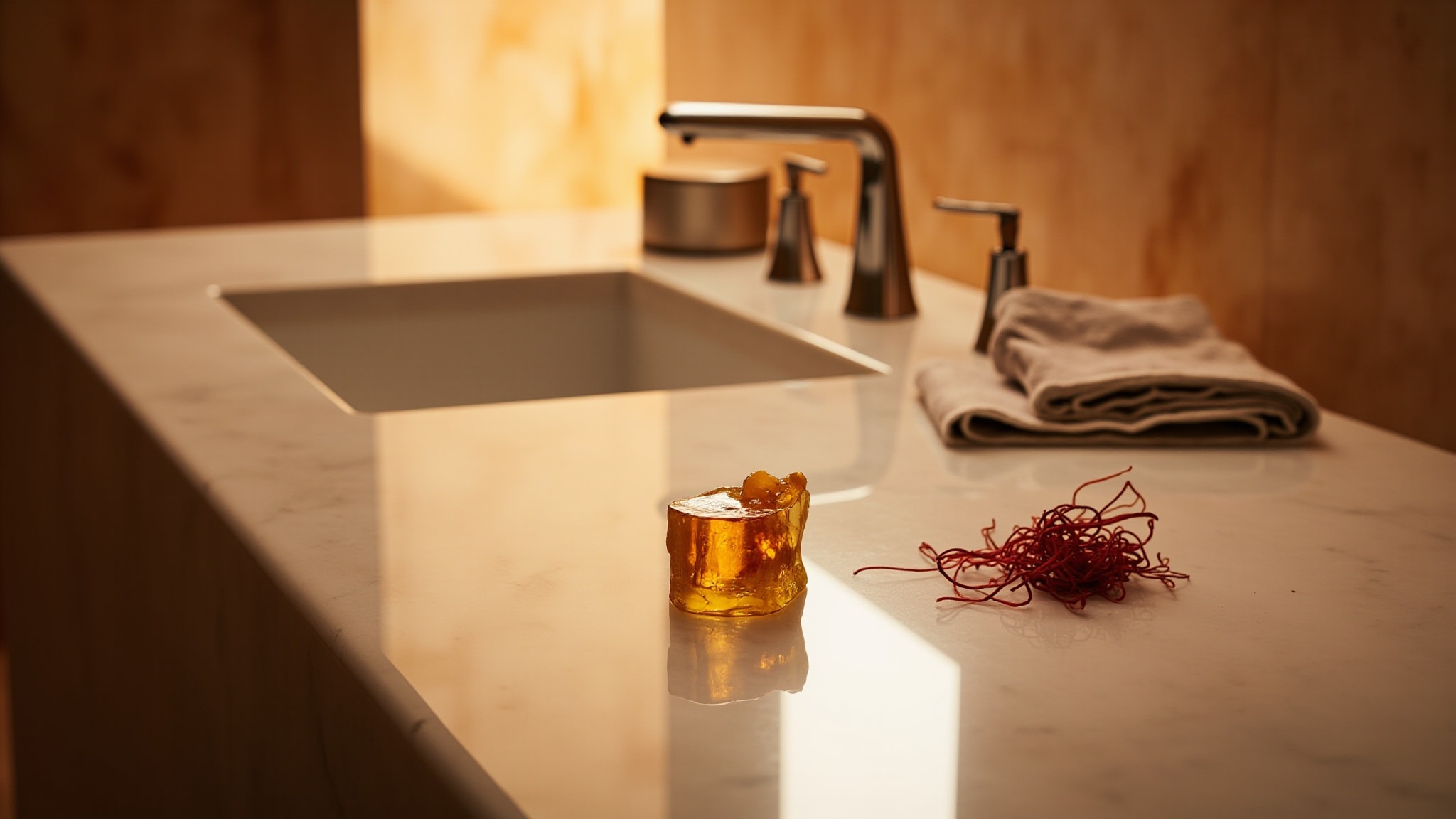
The note structure here rewards attention. Saffron opens with a metallic, almost medicinal brightness that most modern fragrances avoid, it's sharp, assertive, not trying to please. The aldehydes that follow are the real statement: the same material that defined Chanel No.5 and countless mid-century icons. They give Rafia Gold a powdery, vintage elegance that sets it apart from the sweeter, more obviously oriental compositions Al Haramain is known for. The rose doesn't dominate. It hums quietly beneath. The real anchor is sandalwood appearing twice, once in the heart, once in the base, creating an unusually persistent creaminess that ties the whole thing together.
The evolution
The opening hits bright and slightly metallic, saffron's signature, the lemon lifting it into something almost citrus-clean. Within minutes the aldehydes arrive, shifting the register from sharp to soft. The florals emerge quietly: geranium first, then lily of the valley adding a green, dewy quality beneath the powder. Cedar arrives early and doesn't leave. It threads through the heart and carries into the base, giving Rafia Gold a consistent woody backbone that prevents it from ever becoming purely sweet. The drydown is intimate. Musk, amber, and amyris create warmth without heaviness. Patchouli keeps it grounded in earth rather than allowing it to float into pure softness. The aldehydes never fully disappear, they settle into the fabric like a memory of something elegant. On skin, expect 4-6 hours of moderate presence. On fabric, longer. Much longer.
Cultural impact
Rafia Gold occupies a specific niche: warm without being sweet, vintage without being dated, woody without being heavy. In the wider landscape of oriental fragrances, it stands apart through its aldehydic character, the powdery elegance that gives it a timeless quality. Community reception splits on this: those who appreciate its classic sophistication find it endlessly wearable; others note it leans vintage in a way that reads as less contemporary. What can't be argued is its longevity, the concentrated oil format ensures it lasts, and the woody drydown means it stays interesting long after the opening fades.