The Story
Why it exists.
The beginning
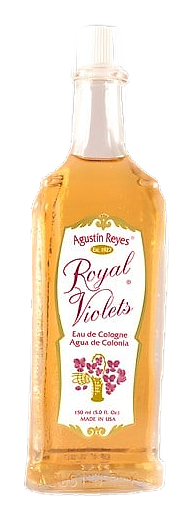
Royal Violets says everything about its intent. This wasn't a compromise fragrance or a market gap filler. It was a statement: violet, done properly, done with conviction. The fragrance opens with a crispness that announces itself clearly, the violet note holding its shape from the first spray through hours of wear. There's a green undertone that keeps it from feeling sweet or confectionary, something that grounds the floral in something almost herbal. As it settles, the powdery softness emerges without ever becoming heavy or overwhelming. The violet never disappears, remaining present but never loud, never competing with the other elements. The result became the house's signature, a fragrance that manages to feel both timeless and immediate, elegant without pretension.
The violet-and-talc combination sounds simple. It isn't. Violet's natural volatility makes it notoriously difficult to work with in a fragrance that lasts. The talc softens the edges, yes, turning what could be fleeting into something that lingers. There's a warmth here that separates Royal Violets from a mere powder accord, something that feels creamy and inviting without tipping into sweetness. Ylang-ylang contributes a richness underneath, a depth that keeps the composition from feeling flat or one-dimensional.
The evolution
The opening arrives clean and bright, the violet making its presence felt without apology. There's a crispness here that feels like clarity, a clean first impression that announces itself confidently. Within a short time, the talc arrives, softened, as if applied with care rather than efficiency. The violet heart blooms quietly underneath, never loud, never competing with the powder. As the fragrance develops, a woody element emerges, not dramatic but present, providing structure and steadiness. Something sweet appears at the edges, subtle and gentle. The violet never disappears entirely. On fabric, it outlasts skin by hours, lingering in a way that feels like evidence rather than memory.
Cultural impact
Royal Violets became a cultural touchstone in Cuba, where it crossed generations and occasions with remarkable ease. It dressed newborns and attended church. It sat on nightstands and lived in medicine cabinets. The fragrance's association with care, with being tended to, gave it a warmth that outlasted any marketing campaign. In Cuban-American communities especially, it functions as olfactory memory: a way of carrying something home that cannot be packed in a suitcase. It belongs to families who have worn it for decades, who recognize it not as a product but as a presence, a familiar comfort that feels like family.