The Story
Why it exists.
The beginning
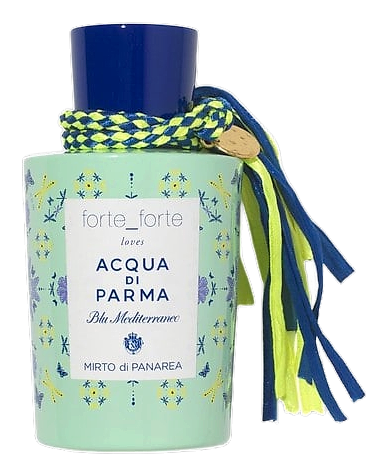
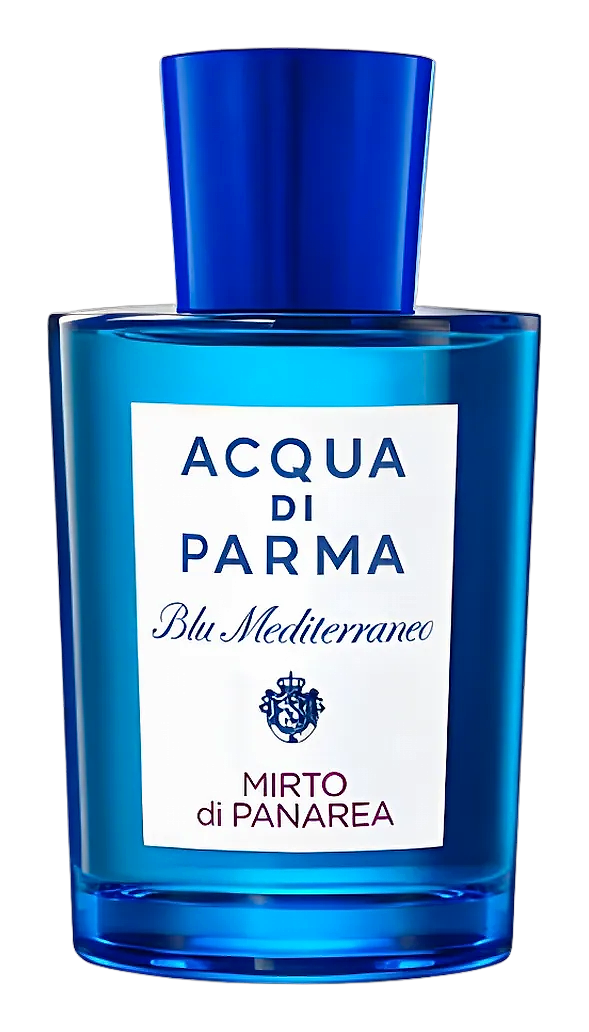
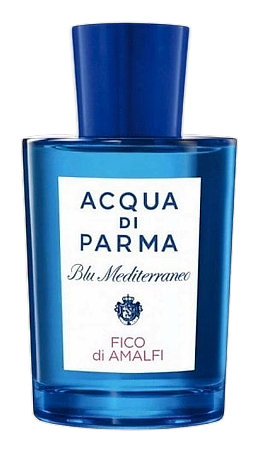
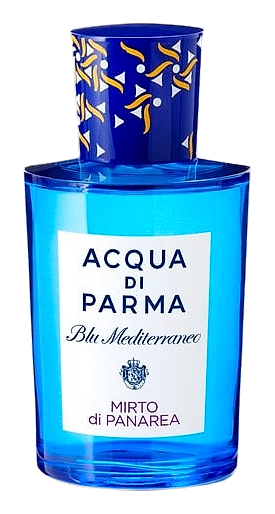
Mirto di Panarea takes its name from the Aeolian island of Panarea, a small volcanic outcrop in the Tyrrhenian Sea off Sicily's coast. The 2024 limited edition reframes the original Blue Mediterraneo composition around myrtle as the lead note, supported by basil, Calabrian bergamot, and Italian lemon, then grounded by jasmine, Damask rose, amber, cedarwood, and juniper. The packaging features an original geometric motif by Dorothée Meilichzon, a tribute to the serene beauty of the sea and the vibrant energy of sun on waves.
Myrtle is the signature here, not a supporting botanical but the compass point of the entire composition. In Mediterranean perfumery, myrtle carries a specific identity: herbal, slightly camphorated, unmistakably coastal. Paired with juniper, it channels the Aegean coastline at altitude, where scrub meets sea air. The citrus and floral heart serves the myrtle rather than competing with it, keeping the Maritime clarity intact while adding warmth and complexity. It's a composition that knows exactly what it is.
The evolution
The opening arrives bright and aromatic, myrtle, basil, and citrus rush in together, like a breeze cutting through coastal maquis scrub. Lemon and bergamot dominate the first thirty minutes, their sparkling quality giving the fragrance its immediate Mediterranean character. As the heart develops, jasmine and Damask rose soften the sharpness, but the myrtle refuses to disappear entirely. It threads through the floral layer, reminding you of the island even as the composition deepens. By the drydown, the citrus has faded and the base takes over. Amber warmth, cedarwood, and juniper come forward, creating a finish that feels like late afternoon on an island, golden light, cool air, the memory of the sea still present in the background. On skin, the fragrance offers moderate longevity with sillage that stays close rather than announcing itself from across the room.
Cultural impact
Myrtle has been a symbol of protection, love, and immortality across Mediterranean cultures for millennia, appearing in Greek mythology, Roman gardens, and Italian folk traditions. The island of Panarea, part of the Aeolian archipelago off Sicily, is home to this aromatic shrub that grows wild along its volcanic coastal paths and inland trails. Its presence in the landscape speaks to a deep-rooted connection between the island's natural environment and its cultural heritage, where traditional botanical ingredients have long been valued for their fragrance and symbolic significance.