Lychee Liqueur
Lychee in perfume is a laboratory creation. The rosy, tropical fruitiness you smell has never been extracted from the actual fruit—it exists only through modern synthesis.

Character
How it smells
The tropical fruit that perfumers must build from scratch.
No essential oil exists for lychee. Perfumers rebuild its scent using cis-rose oxide and other aromatic molecules to capture its unmistakable rosy sweetness.


Origin
China
Lychee carries a documented history stretching back over two millennia. Chinese records mention the fruit as early as 1059 AD, describing it as a prized delicacy reserved for emperors and nobility. Ancient texts detail dozens of cultivars, each with distinct qualities, and the fruit appears in poetry and painting as a symbol of romance and good fortune.
The fruit originated in southern China's Guangdong and Fujian provinces, where subtropical climate and fertile soil created ideal growing conditions. From China, lychee spread along ancient trade routes to Burma, Thailand, Vietnam, and the Philippines. Buddhist monks are credited with introducing the fruit to Southeast Asia. European travelers encountered lychee centuries later, but the fruit's perishability limited its spread beyond Asia until modern refrigeration and air transport made global trade feasible.
In Western perfumery, lychee remained unexplored until the late 20th century. Advances in organic synthesis finally allowed perfumers to recreate the fruit's delicate, rosy sweetness. Once it became available as an aroma chemical, lychee quickly became a staple of gourmand fragrances, prized for its sweet tropical character that adds a modern, playful quality to compositions.
Wears it best
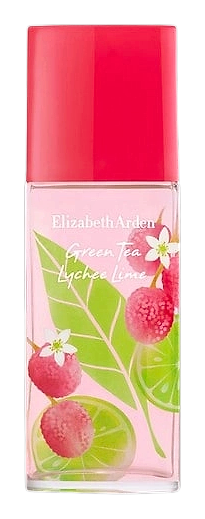
Fragrances featuring Lychee Liqueur
Good to know
Questions, answered
The essentials on Lychee Liqueur in perfumery: how it smells, where it comes from, and how it behaves on skin.
Is lychee a natural fragrance ingredient?
No. Lychee cannot produce an essential oil through any extraction method. Its scent exists only through laboratory synthesis using aromatic molecules like cis-rose oxide and gamma-decalactone.
What does lychee smell like in perfume?
Lychee smells like fresh tropical fruit with a distinct rosy quality. It is sweeter than most fruits but remains light and refreshing, never heavy or syrupy. The scent combines watery, peachy, and floral facets.
Why can't lychee be extracted naturally?
Lychee flesh is too delicate and perishable for standard extraction. Its aromatic compounds degrade during steam distillation and do not survive solvent extraction intact. No viable method produces an authentic lychee essential oil.
What molecules recreate lychee's scent?
Cis-rose oxide provides lychee's signature rosy, green freshness. Gamma-decalactone adds creamy, peachy depth. Other molecules introduce watery and tropical floral notes that complete the profile.
Where does real lychee fruit grow?
Real lychee originated in southern China, particularly Guangdong and Fujian provinces, where it has been cultivated for over 2,000 years. Today it grows throughout Southeast Asia, India, South Africa, Israel, and parts of Latin America.
When did lychee become a fragrance ingredient?
Lychee entered Western perfumery in the late 20th century once organic synthesis techniques advanced sufficiently. It gained popularity in the 1990s and became a signature note in fruity and gourmand fragrances.
Does synthetic lychee smell artificial?
Modern synthetic lychee closely mimics the natural fruit. High-quality reconstructions capture the characteristic rosy sweetness and tropical freshness without the heavy syrupiness of artificial fruit flavors used in food.
What perfumes feature lychee prominently?
Lychee appears in countless fragrances across all price ranges, from mass-market fruity scents to niche compositions. It pairs well with rose, white musk, and other tropical fruits, often appearing in spring and summer fragrance lines.