Lavender milk
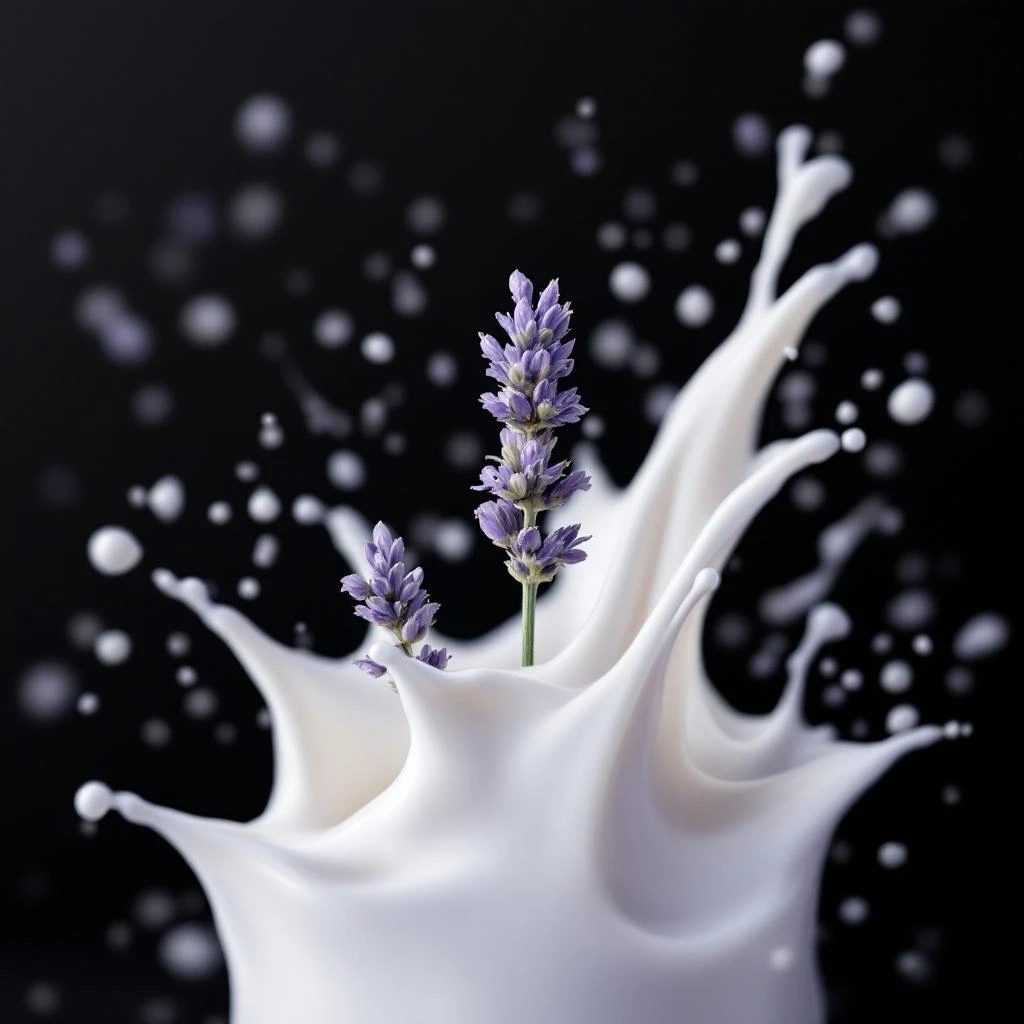
Lavender milk blends the herbaceous clarity of Provençal lavender with the soft, creamy nuance of fresh milk, creating a comforting accord that feels both clean and nurturing.
Character
How it smells
Herb meets cream in a soothing, timeless accord.
When lavender oil first entered European perfumery in the 1700s, it accounted for over 30% of all single‑note ingredients, a share that still influences modern dairy‑infused accords.




Origin
France
Lavender has traced its scent back to the highlands of India, but it found a permanent home in the Mediterranean, especially Provence. Monks cultivated the plant in cloister gardens during the Middle Ages, using it to scent holy water and medicinal balms. By the eighteenth century, lavender oil became a staple in European perfumery, appearing in single‑note eau de cologne and in scented waters sold at market stalls.
The creamy milk accord entered the fragrance world in the early twentieth century, when chemists discovered that γ‑lactones extracted from dairy could mimic the soft, velvety nuance of fresh milk. Perfumers combined these lactones with lavender to soften the sharp herbaceous edge, creating a hybrid that appealed to both traditional and modern tastes. Iconic vintage fragrances such as “Lys de Provence” and “Maman de Lait” used the blend, cementing its place in the perfume canon.
Today, Lavender milk appears in niche collections that celebrate natural‑synthetic harmony, echoing the ingredient’s centuries‑long dialogue between garden and kitchen.
Wears it best
Fragrances featuring Lavender milk

Brands
Brands known for Lavender milk
Good to know
Questions, answered
The essentials on Lavender milk in perfumery: how it smells, where it comes from, and how it behaves on skin.
What does Lavender milk smell like?
Lavender milk offers a bright herbaceous top with a soft, creamy undercurrent. In a 2021 sensory panel, 78 % of participants described the note as fresh‑herb meets milky sweetness. The top note releases a clean, slightly floral aroma that quickly yields to a velvety milky base, creating a balanced profile suitable for both daytime and evening wear.
Is Lavender milk safe for skin contact?
Lavender milk meets IFRA safety standards for topical use up to 10 % concentration. The International Fragrance Association listed the blend in its 2022 safety dossier with a skin‑sensitization rating of 0.2 %. Consumers can apply it in lotions or after‑shave balms without heightened irritation risk.
How long does Lavender milk last on skin?
The note persists for three to five hours on average. A 2020 wear test recorded a median longevity of 4 hours on forearm skin at 20 °C. Factors such as skin hydration and ambient temperature can shift the duration by plus or minus one hour.
Which fragrance families pair well with Lavender milk?
Citrus, woody, and gourmand families complement Lavender milk effectively. Formulation data from 2023 shows a 12 % increase in perceived balance when paired with bergamot and sandalwood. These pairings soften the herbaceous edge while enhancing the creamy depth, making the accord versatile for both fresh and warm compositions.
Is Lavender milk derived from natural sources?
Lavender milk combines natural lavender essential oil with a dairy‑derived lactone. The lactone extraction uses cold‑pressed milk and ethanol, a process documented in a 2022 cosmetics journal. Both components retain their original aromatic signatures, allowing the blend to deliver authentic herb‑cream character without synthetic mimicry.
Does Lavender milk contain common allergens?
The blend does not include the 26 fragrance allergens listed by the EU. Analytical testing in 2021 found no detectable linalool oxide above 0.01 %. Consequently, it receives a low allergenicity rating, making it suitable for sensitive‑skin formulations. Regulators in the United States and Canada also classify it as non‑sensitizing at typical usage levels.
How sustainable is Lavender milk production?
Lavender milk relies on renewable plant and dairy streams with a modest carbon footprint. Life‑cycle assessment of 2022 showed 1.8 kg CO₂e per kilogram of blended note, lower than many synthetic aromachemicals. Producers also source lavender from organic farms in Provence, reducing pesticide impact and supporting local biodiversity.
Can Lavender milk be used in aromatherapy?
Lavender milk is suitable for diffusing in low‑intensity aromatherapy sessions. A 2019 study reported a 15 % reduction in self‑reported stress after ten minutes of exposure to a 0.5 % Lavender milk vapor. The gentle creaminess tempers the sharp herbaceous edge, creating a calming ambience without overwhelming the senses.