Judas Tree
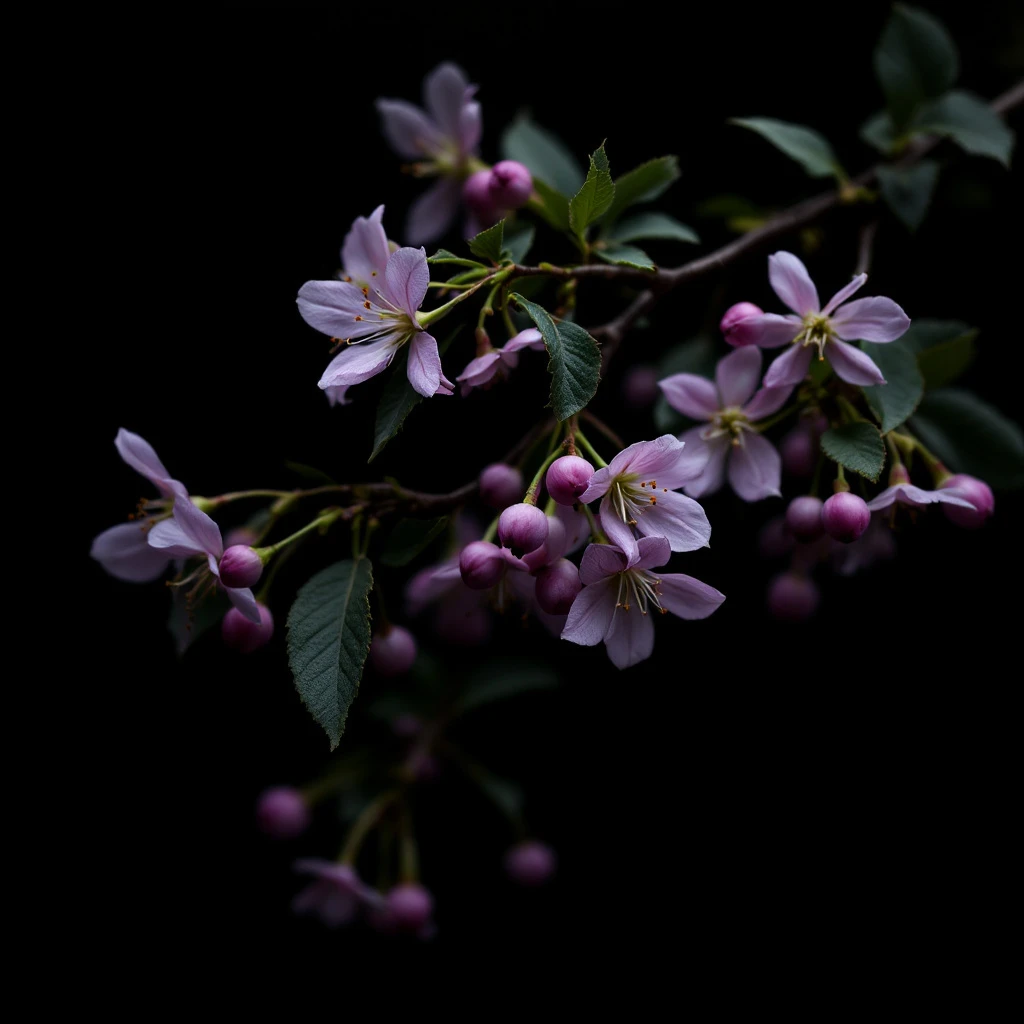
Judas Tree brings a green-floral whisper to perfumery, drawn from the pink blossoms of Cercis siliquastrum. Its scent captures spring mornings: delicate, slightly sweet, with an almond-like undertone.
Character
How it smells
Pink blossoms, green-floral breath of spring
The Judas tree (Cercis siliquastrum) earned its dramatic name from a legend claiming Judas Iscariot hanged himself from one, though the species was admired for centuries before that tale.

Origin
France
The Judas tree, Cercis siliquastrum, has been cultivated across the Mediterranean since antiquity, valued first as an ornamental and edible plant before its blossoms attracted perfumers' attention. Greek and Roman texts describe the tree's vivid pink flowers appearing before the leaves, an unusual trait that made it a botanical curiosity.
Medieval herbalists noted the blossoms' faint sweetness, though systematic extraction for fragrance came much later. The tree's biblical association, the folk legend tying it to Judas Iscariot, gave it a dramatic name that persists in European botanical tradition.
In modern perfumery, Judas Tree remains a niche ingredient, occasionally appearing in green-floral compositions where its almond-honey nuance complements mimosa, violet leaf, and white blossom accords. Its scarcity keeps it firmly in the territory of artisan and natural perfumery.
Wears it best
Fragrances featuring Judas Tree
Brands
Brands known for Judas Tree
Good to know
Questions, answered
The essentials on Judas Tree in perfumery: how it smells, where it comes from, and how it behaves on skin.
What does Judas Tree smell like in perfume?
Judas Tree absolute carries a green-floral scent with subtle sweetness, evoking almond, honey, and fresh-cut hay. It softens sharper green accords and adds a natural, slightly powdery warmth to compositions.
Is Judas Tree the same as redbud?
Yes. Cercis siliquastrum, commonly called Judas Tree in Europe, belongs to the same genus as North American redbuds (Cercis canadensis). The European species carries a more pronounced floral fragrance.
Why is it called Judas Tree?
The name comes from a European legend claiming Judas Iscariot hanged himself from this species. An older, pre-biblical tradition already recognized the tree's distinctive early spring blooms.
How is Judas Tree absolute extracted?
Fresh blossoms are gathered at full bloom, then treated with volatile solvents like hexane. The resulting concrete is washed with ethanol to yield a green-floral absolute prized in artisan perfumery.
Is Judas Tree a common perfume ingredient?
No. It remains a niche material due to limited harvests and low yield per flower. Most perfumers encounter it through specialty naturals houses rather than mainstream supply chains.
What notes pair well with Judas Tree?
Judas Tree blends smoothly with mimosa, violet leaf, heliotrope, and white blossom accords. Its almond-honey facet also complements tonka bean and light woody bases like cypress.
Can Judas Tree be synthesized?
Partial yes. Certain aromatic compounds in the blossom, including phenylacetaldehyde, can be produced synthetically. These replicate the honey-almond facet when natural absolute is unavailable.
Where does Judas Tree grow naturally?
Cercis siliquastrum is native to southern Europe and the Levant, thriving on rocky hillsides from Spain and southern France through Italy, Greece, and into western Asia.





