Grape Leaves
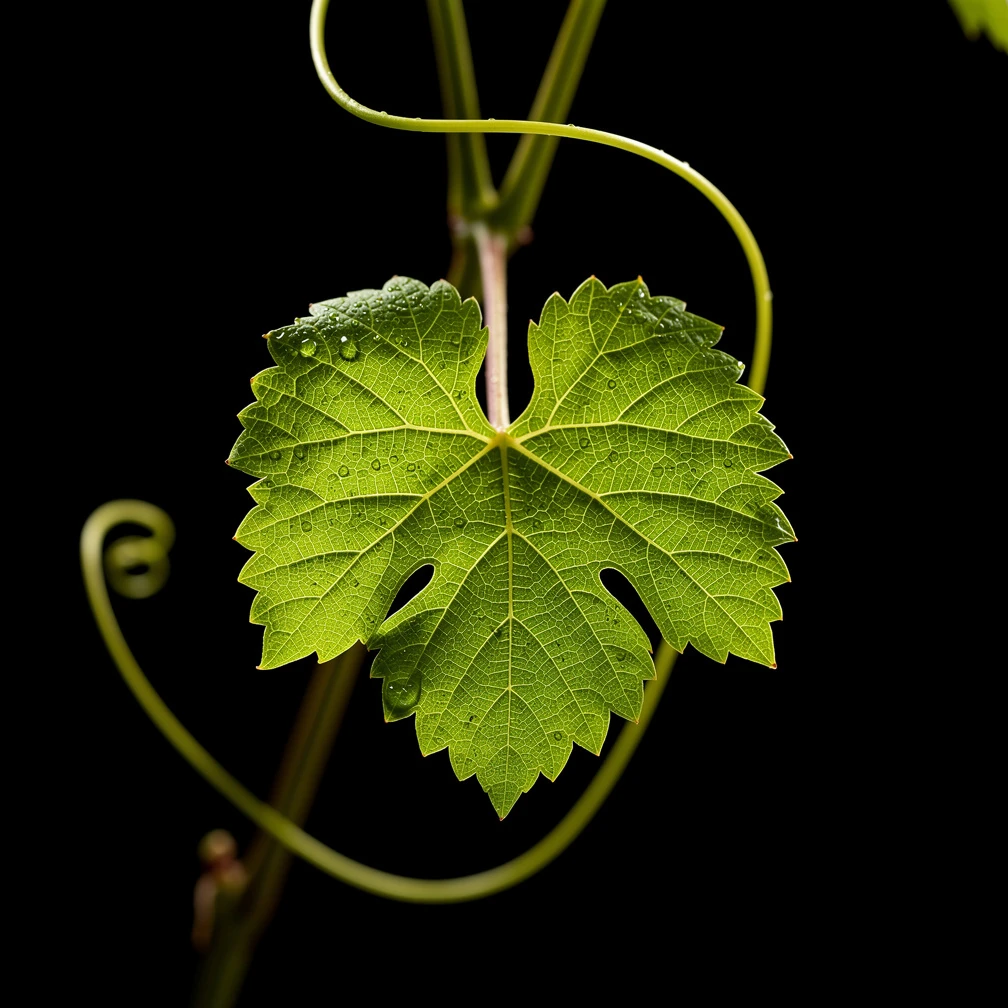
Grape leaves bring the crisp, verdant character of Mediterranean vineyards to perfume. This green, slightly bitter note captures the freshness of crushed leaves and morning dew on sun-warmed vines.
Character
How it smells
Mediterranean vineyard freshness captured in a bottle.
Cis-3-hexenol, the primary compound in reconstructed grape leaf, occurs naturally across the plant kingdom, giving freshly cut grass and many leaves their characteristic scent.






Origin
Turkey
Grapevines rank among humanity's oldest cultivated plants, with evidence of domestication dating to 6000 BCE across modern Turkey, Greece, and the Middle East. Ancient Egyptians incorporated grape-derived materials into religious rituals and cosmetics, establishing early precedent for using grape notes in fragrant preparations. The amphorae of antiquity carried perfumed wines infused with crushed leaves and tendrils.
Roman and Greek civilizations advanced extraction techniques, employing enfleurage and early distillation to capture plant scents. The emergence of modern organic chemistry in the 19th century enabled the synthesis of key green leaf compounds. By the mid-20th century, perfumers could reconstruct grape leaf notes with unprecedented accuracy using pure aromatic molecules.
Today, grape leaf appears as a subtle bridge note in many fragrances, valued for its ability to evoke Mediterranean landscapes and the fresh morning air of vineyard rows.
Wears it best
Fragrances featuring Grape Leaves

Brands
Brands known for Grape Leaves
Good to know
Questions, answered
The essentials on Grape Leaves in perfumery: how it smells, where it comes from, and how it behaves on skin.
Is grape leaf a natural or synthetic perfumery ingredient?
Grape leaf is a synthetic reconstruction. No standardized natural grape leaf oil exists in perfumery. The note is built from green-leaf aroma chemicals like cis-3-hexenol, which replicate the scent of crushed vine leaves.
What does the grape leaf note smell like?
Grape leaf smells like fresh-cut vegetation with a crisp, slightly bitter green character. It carries the dewy, vegetative quality of crushed leaves with subtle undertones of damp earth and herbaceous warmth.
Can grape leaf be steam distilled from real vines?
While grape leaves contain aromatic compounds, no commercial steam distillation process has produced a standardized grape leaf essential oil for perfumery use. All commercial grape leaf materials are reconstructed.
What is the key aroma chemical in grape leaf reconstruction?
Cis-3-hexenol is the primary compound, known as leaf alcohol. Cis-3-hexenyl acetate provides fruity green support. These two materials form the backbone of most grape leaf accords.
How does grape leaf differ from other green notes like galbanum or violet leaf?
Grape leaf is softer and more rounded than galbanum's sharp intensity. It lacks violet leaf's mineral, slightly anaesthetic quality. Grape leaf occupies a gentle, pastoral middle ground among green notes.
In which fragrance families does grape leaf appear?
Grape leaf bridges chypre and fresh fougere compositions. It appears frequently in perfumes with vineyard, nature, and Mediterranean themes. Both masculine and feminine fragrances use it as a bridging or heart note.
What compounds support the grape leaf accord?
Cis-3-hexenyl benzoate adds depth and warmth. Various aliphatic aldehydes contribute freshness. Supporting green materials like dihydroionone beta create floral undertones within the overall vegetative character.
Does grape leaf have a seasonal character in perfumery?
Grape leaf absolute can reference different seasonal qualities. Spring harvest yields lighter, more delicate green notes. Late summer leaves develop deeper, more resinous aromatic complexity.