The Story
Why it exists.
The beginning
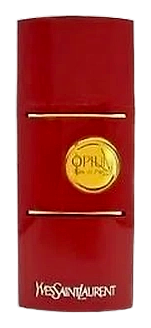
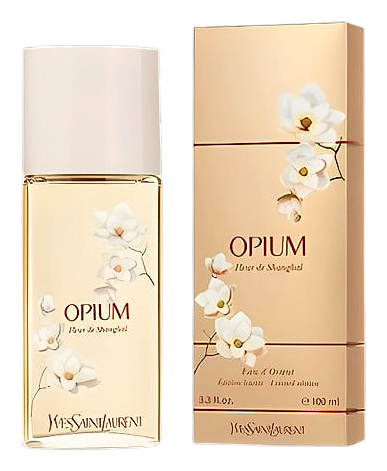
Opium Fleur de Shanghai arrived in 2005 as part of one of fragrance's most notorious lineages. The original Opium launched in 1977, a bold addition to the Yves Saint Laurent fragrance portfolio that carried a provocative name. By 2005, the house had established Opium as a cornerstone of its olfactory identity. Fleur de Shanghai took that heritage and created something more intimate, more floral, but no less daring. The Shanghai reference held significance for the house, drawing on the energy and dynamism associated with the city. This was Opium reimagined for those drawn to the original's depth but seeking florals to carry them in a different direction.
What makes the structure unusual is the carnation placement. Carnation appears front and center in the heart of Fleur de Shanghai, giving the composition its characteristic clean heat. It reads almost like a spice but carries the velvety texture of a blossom. Myrrh bridges the transition, its balsamic resinous quality pulling the composition from floral warmth into the deeper amber-vanilla-patchouli base without any jarring handoff. Mandarin and bergamot create an initial brightness that cuts through the opening moments before the warmth takes over.
The evolution
Bergamot and mandarin arrive first, that immediate clarity, like stepping from a cold street into a warm room. It reads sharp for the first minutes, almost metallic, then softens as the carnation asserts itself. Carnation is the tell here. Not the dried clove-and-honey carnation of potpourri, something greener, with a peppery edge that makes the florals feel awake rather than sleepy. Magnolia follows, adding cream. Star jasmine brings an exotic undertone, that particular headiness that recalls humid summer nights rather than pressed petals. By the third hour, myrrh takes the lead, pulling the composition downward into its resinous warmth. Amber and vanilla arrive together, not as a wall of sweetness but as a settling, a weight that distributes evenly across the skin. Patchouli anchors the base, dry and earthy, lending its characteristic depth to the final hours of wear.
Cultural impact
As a limited edition from 2005, Fleur de Shanghai occupies a distinctive position within the Opium family. The carnation-carnation-myrrh spine attracts those seeking oriental warmth without the original Opium's assertiveness. Collectors recognize it as a distinctive expression within the house, notable for its floral-forward orientation and its departure from typical oriental conventions. The fragrance represents a particular moment in the house's creative evolution, showcasing a willingness to take risks within a familiar framework.