
The Story
Why it exists.
The beginning
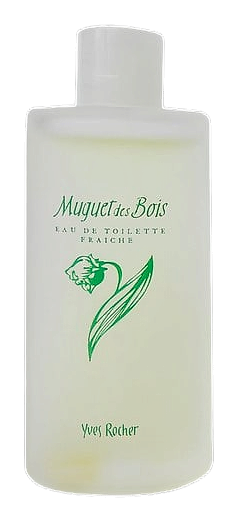
Muguet des Bois takes its name directly from the French, lily of the valley, the small white bell-shaped flower that blooms in May woods. In France, May 1st means muguet: sprigs exchanged on street corners, tucked behind ears, carried home in paper cones. The flower has perfumed spring celebrations since the Renaissance, associated with luck and returning happiness. Olivier Gillotin created Muguet des Bois in 1998, working within Yves Rocher's botanical framework. The scent opens with a bright citrus note that suggests the first cool light of a May morning, before the day warms. The floral heart captures the essence of the flower itself, the cool, slightly dewy quality that rises from a forest floor in early spring.
Tonka bean appears twice in the pyramid, heart and base, and it's doing the same quiet work both times: adding a hint of warmth without adding weight. Iris brings something sharper, almost mineral here, not the buttery, powdery iris of heavier compositions. It gives the lily of the valley something to stand against, keeping the floral from going soapy in a way that would tip into detergent. Jasmine does what jasmine does, brings a subtle warmth to the center, but it's not the star. The overall impression is one of delicate balance, where each note supports the others without overwhelming.
The evolution
The opening is the fragrance. Grapefruit arrives bright and clean, citrus oil brightness that reads as green rather than sweet. It doesn't linger indefinitely, ceding ground to the floral heart as the composition develops. The hand-off is gentle. No jarring shift. The lily of the valley takes over while the grapefruit is still fading, creating a transition that feels like morning brightening rather than one scent replacing another. In the heart, the composition finds its character. Lily of the valley is unmistakable here, that cool, slightly dewy floral that smells like green stems and clean water. The iris adds a powdery counterpoint that keeps it from going flat. Jasmine threads through, barely there, just enough warmth to prevent the whole thing from reading as colorless. This phase represents the heart of the fragrance's character. The drydown is subtle.
Cultural impact
Muguet des Bois occupies a particular space in French perfumery: the straightforward botanical floral. Rather than positioning itself as a statement fragrance, it offered simplicity, a clean and pleasant scent that wore like a second skin. The fragrance resonated with those seeking an uncomplicated approach to fragrance, a daily wearing rather than a special occasion one. This kind of fresh floral had broad appeal, functioning as an introduction to fragrance for many wearers. It demonstrated that botany could translate into something wearable and pleasant without requiring effort or expertise from the wearer.