
The Story
Why it exists.
The beginning
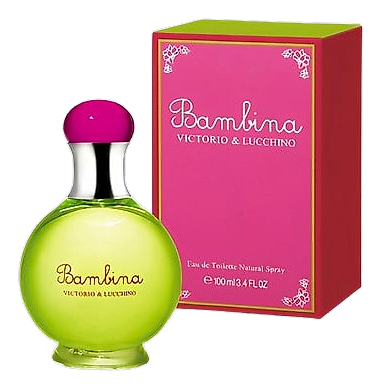
Bambina arrived in 2004 from the Spanish house Victorio & Lucchino. The composition is built around a powdery, floral profile, with neroli opening the way, followed by a heart of jasmine and freesia cushioned against a base of white cedar and musk. The neroli has a delicate citrus-floral lift, bright without shouting, a gentler entry than the heavier white florals that sometimes dominate this category. The jasmine appears alongside the freesia's cooler green edges, and even the base stays soft, white cedar and musk rather than heavier resins. Reading the composition, you sense a hand that wanted softness to feel considered rather than accidental, and the powdery register feels like a deliberate choice rather than a byproduct.
What makes Bambina interesting is its restraint. Here, neroli carries the opening instead of something heavier, a delicate citrus-floral that doesn't shout. The jasmine appears but never overwhelms, cushioned by freesia's cooler green edges. Even the base stays gentle: white cedar and musk rather than heavier resins or ambers. The composition reads as a study in how softness can hold structure, each note paced so nothing rushes past the next.
The evolution
The first ten minutes belong to neroli and bergamot, bright and slightly bitter, the way orange peel smells when you tear it with your fingers. Mandarin sweetens the edge. Around the twenty-minute mark, jasmine steps forward but stays seated, never standing up. Freesia joins it, cool and aqueous, and the whole thing starts to feel less like a perfume and more like fabric softener. On skin the transition is quick. By the hour mark, the florals have folded into musk and the cedar shows up underneath. What's interesting is how the cedar behaves: it doesn't sharpen into pencil shavings, it softens into something warmer, almost creamy, with the faintest woody hum. The powder quality intensifies as it dries down. This is a close-skin fragrance, one that lives in the radius of an embrace rather than across a room.
Cultural impact
Bambina arrived in 2004 as part of the Spanish house Victorio & Lucchino's catalogue, and it carried an aesthetic that felt distinctly feminine, soft, and quietly romantic. The fragrance extended the brand's reach into the lighter, powdery floral territory, and its easy, approachable character made it a popular choice for gifting across age groups and occasions in Spain. The powdery composition, anchored by neroli, jasmine, freesia, white cedar, and musk, struck a chord with buyers who wanted a fragrance that felt gentle and giftable rather than bold or statement-making.