
The Story
Why it exists.
The beginning
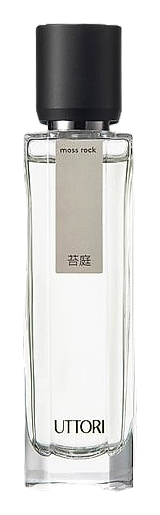
Moss Rock 苔庭 was created by perfumer Jasmine Liu for Uttori, a Chinese fragrance house. The name evokes a moss-covered garden terrace, where stone meets growth, where damp meets stillness. Liu worked with that tension: the mineral weight of rock against the living softness of moss, the chill of rain against the warmth trapped underneath. The result is a scent that feels grounded yet alive, a place where elements coexist rather than compete. Liu drew from the physical world to build something that carries weight without heaviness, stillness without silence.
What makes this structure unusual is the rain accord working alongside the moss rather than replacing it. The two are layered, which creates a specific quality: not the abstraction of rain, but the sensation of moisture present in the composition itself. The stone notes in the heart reinforce this layered quality throughout the wear. It's a composition that rewards patience, because the opening doesn't reveal what it's building toward. Each layer arrives gradually, and the interplay between wet and grounded gives the fragrance a texture that feels deliberate rather than accidental.
The evolution
The first minutes are cold and green, artemisia hits sharp, galbanum follows with that bitter, almost medicinal intensity. Cypress steadies it, adds a slight woodiness. Then the rain arrives, and with it the moss. Not a polite green note. Dense, damp, slightly animal. Stone sits underneath throughout, keeping everything grounded. By hour two, the fir and vetiver take over. The frankincense lingers in the background, a resinous whisper that stays close to the skin. On fabric, it settles into something quieter, earthy, almost mineral. The longevity holds firm through the mid-wear, with the moss thinning before the woody base fully asserts itself and the vetiver-fir anchor remaining present through the drydown.
Cultural impact
Moss Rock 苔庭 occupies a distinctive position in contemporary Chinese perfumery, drawing from traditional cultural aesthetics to create an atmospheric experience. The damp garden terrace motif resonates with cultural values of mindfulness and connection to nature, offering a meditative quality that feels both intimate and broadly appealing. The fragrance succeeds as an olfactory study of place, grounded in recognizable landscape associations while remaining open enough to speak to a wider audience.