The Story
Why it exists.
The beginning
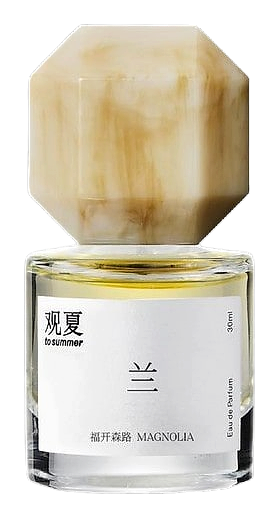
David Huang designed Magnolia as an act of subtraction. The 2020 launch arrived with a clear brief: capture the magnolia in its truest moment, neither amplified nor stripped. What emerged is a fragrance built on restraint, on the idea that a flower heard quietly speaks louder than one shouting. The name is direct because the intention is direct. This is magnolia observed, not performed.
The pyramid structure makes an unusual choice. Most white florals announce the flower immediately, jasmine, tuberose, the whole bouquet at once. Magnolia delays. The green notes and narcissus arrive first, a cool botanical preface that teaches the nose to wait. The flower doesn't explode into existence. It unfolds, petal by petal, as the top notes recede. This is a fragrance built on patience, yours and its own.
The evolution
The opening hits green and immediate, stems cut clean, a cool botanical snap that clears the air. Narcissus adds a faint bitterness, medicinal and grounding, like sap on your fingers. Twenty minutes in, the magnolia softens. The buttery richness arrives quietly, no announcement, just warmth where coolness was. The heart spreads slow: jasmine and neroli lift the magnolia higher, but the volume never rises. By the second hour, everything settles close. Cedar anchors. Amber warms. Musk becomes skin. What lingers is intimate, skin-close, the kind of presence that someone standing near you will discover rather than you projecting outward. It doesn't fill a room. It becomes part of the room's atmosphere.
Cultural impact
Magnolia arrived in 2020 as part of a wave of Chinese fragrance houses staking out distinctly Asian narratives in a global market. To Summer's approach, restrained, contemplative, heritage-rooted, positioned it as an alternative to the projection-heavy aesthetics dominating niche perfumery at the time. Wearers describe it as the scent of someone who walks into a room and doesn't need to announce themselves.