The Story
Why it exists.
The beginning
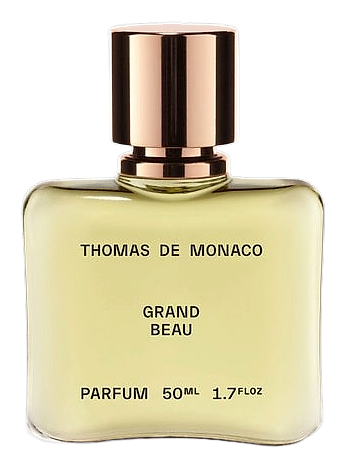
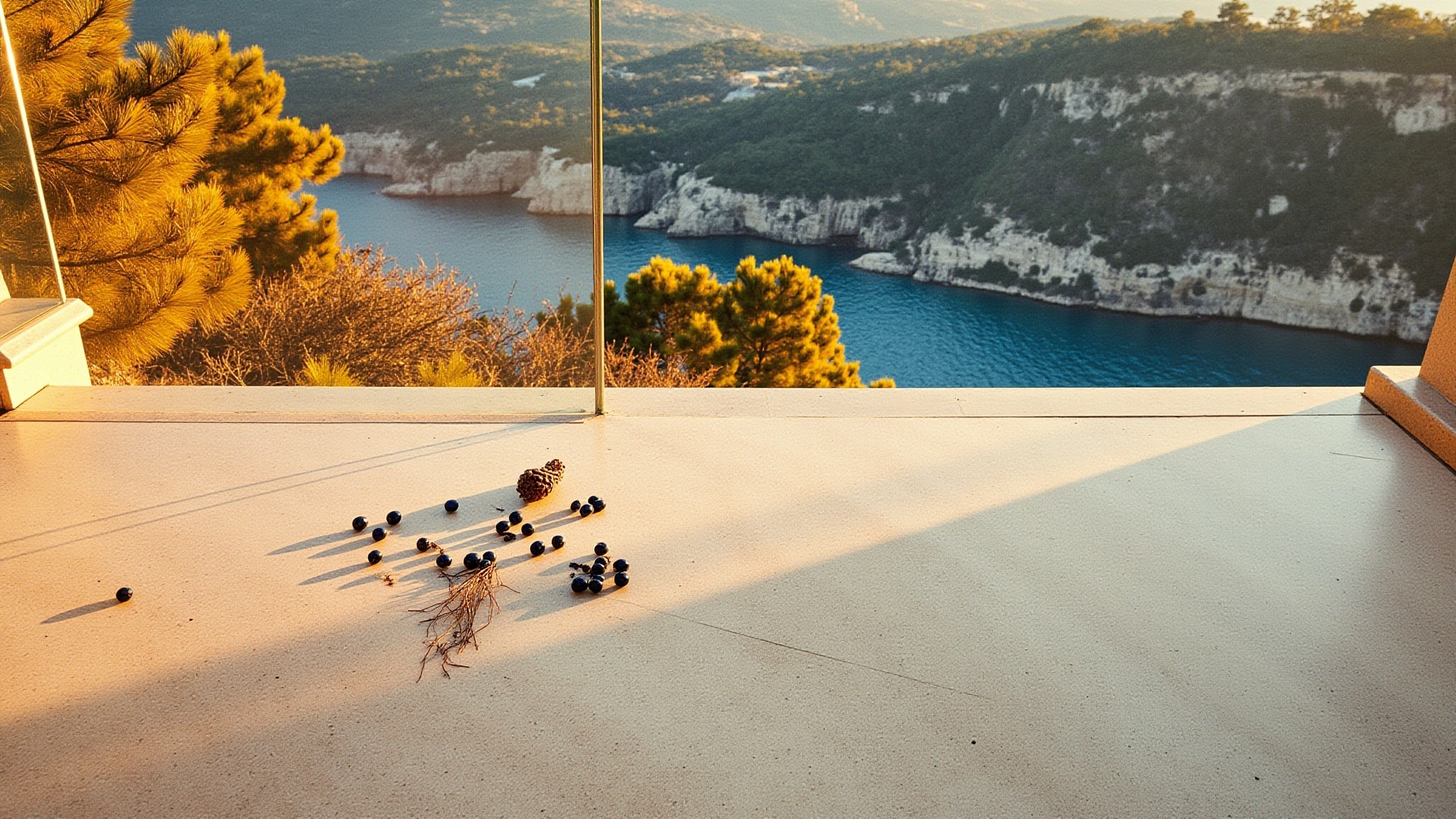
Grand Beau belongs to the Extraits Uniques collection, where Thomas de Monaco distills singular moments into wearable form. The brief here was a beautiful day on the French Riviera, not the postcard version, but the one you actually remember: sea salt in the air, the particular shade of light on limestone, pine trees leaning over the path. Maurus Bachmann worked with the Luzi laboratory to translate that afternoon into a composition that could outlast it. The result doesn't try to replicate a place. It replicates a feeling, unhurried, warm, complete. The name carries it: Grand Beau means grand handsome, or perhaps grand beautiful, depending on who's translating. It fits the fragrance's posture, composed, self-assured, with nothing to prove.
What's interesting here isn't any single note, it's the structure. The opening gives you conifer and maritime atmosphere simultaneously, thanks to an unusual pairing of pine absolute with seaweed absolute. That combination rarely appears in mainstream perfumery because it risks reading as medicinal if the supporting heart doesn't soften it. Bachmann's solution is to thread angelica root through the heart alongside the more expected tuberose absolute and olibanum, angelica adds a faintly camphorated, herbal lift that bridges the gap between the conifer top and the warmer florals below.
The evolution
The opening announces conifer immediately, pine absolute, juniper berry, the sharp green-bitter smell of needles crushed between fingers. Thirty seconds in, the angelica root surfaces as a faintly medicinal, herbal lift, preventing the pine from ever settling into something linear. This early phase reads as a mountain path, not a beach. The transition happens around the fifteen-minute mark as the heart arrives: tuberose absolute blooms into the composition, waxy and narcotic, while olibanum smoke curls beneath it. The angelica retreats but doesn't disappear, it becomes a kind of structural wire holding the florals off the resinous base. By the second hour, the drydown has fully taken over. The marine element shifts from seaweed absolute into something cleaner, mineral, ambrocenide doing its work as an ambergris bridge rather than a sea-salt simulacrum. The ambrette seed appears as a soft musk that keeps everything close to skin. Vetiver grounds the whole thing into dry earth.
Cultural impact
Grand Beau occupies a specific position in the niche coastal fragrance space, it's neither the aquatic freshness of mainstream marine fragrances nor the aggressively animalic marine-oud compositions that populate the deeper end of niche. What makes it stand out is the conifer element running through the entire arc: the pine and juniper opening establishes a mountain character that only gradually surrenders to the sea. Wearers tend to describe it as the fragrance of someone who enters a room without needing to announce themselves, composed, unhurried, with the kind of quiet confidence that comes from knowing exactly where you are. The moderate sillage contributes to this impression.