
The Story
Why it exists.
The beginning
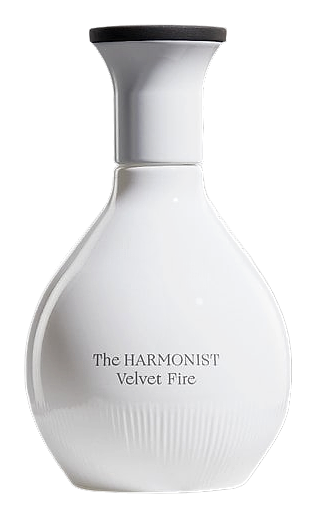
Velvet Fire arrived in 2020 as part of The Yang Collection, The Harmonist's framework built on Feng Shui principles where each fragrance corresponds to an element. Yang: the assertive principle. Light. Heat. Energy given form. Perfumer Guillaume Flavigny was working with that duality from the start, cool aromatic herbs against warm smoky woods. The tension is the point. The name says it: fire seen through velvet. Bright and contained at once.
The pyramid moves from cool to warm without apology. Cypress and myrtle open with a green, almost resinous brightness, Mediterranean air before the heat settles. Clary sage adds an herbaceous complexity that few houses handle well; here it bridges the freshness to what comes next. The heart is where Flavigny earns the price tag: saffron and tobacco together create a richness that isn't heavy so much as authoritative. Below that, oud and tonka bean form a base that keeps giving, smoky depth meeting sweet warmth that doesn't dissolve into generic amber. The structure rewards attention. This isn't a fragrance that announces itself and retreats. It builds.
The evolution
The opening hits with cypress and clary sage, a green clarity that's almost bracing. Myrtle softens the edges slightly but the effect remains cool, crisp, morning-in-a-forest kind of bright. Give it ten minutes. The tobacco emerges first, slightly dry, then the saffron threads in with its metallic-sweet warmth. By the half-hour mark the herbs have receded and you're in the heart: warm, a little spicy, unmistakably tobacco-forward. The oud doesn't arrive all at once. It builds underneath, a smoky foundation that prevents the drydown from ever going too sweet. Two hours in, tonka bean emerges, not gourmand, just warm. The whole thing settles into something close, skin-warm, present without projecting. It stays this way for hours. On fabric the next morning: smoke and faint sweetness, the ghost of what you wore the night before.
Cultural impact
Velvet Fire launched in 2020 as part of The Harmonist's Feng Shui-aligned Yang Collection, which positioned fragrance as a tool for energy work rather than simple aesthetics. The collection represented a departure from conventional luxury perfumery, introducing consumers to the concept of scent as intentional, selecting aromas based on energetic principles rather than trend or nostalgia. The Harmonist's approach resonated with a growing audience seeking meaning beyond marketing, contributing to a broader shift in how niche fragrances are marketed and discussed.