
The Story
Why it exists.
The beginning
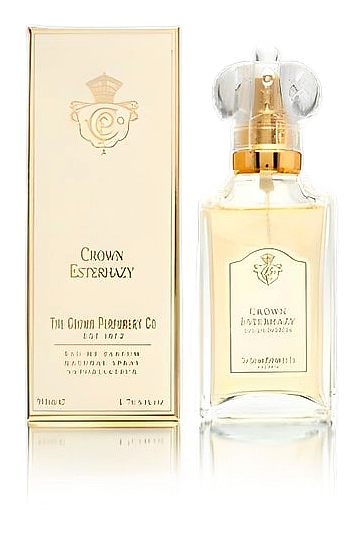
William Thomson designed Crown Esterhazy in 1874 for the Princess Esterhazy. The brief seems to have been simple: translate the feeling of a citrus grove at its peak into something a woman could wear. Not a literal interpretation, Victorian perfumery rarely was, but an emotional one. The brightness of fruit heavy on the branch. The herbs planted beneath to keep the soil cool. The afternoon air that smells green before it smells anything else. Thomson understood something about restraint: that a perfume could be vivid without being loud, fresh without being thin. The name itself, Esterhazy, carries the weight of European aristocracy, but the fragrance refuses to intimidate. It belongs to the garden, not the ballroom.
What makes the structure interesting is the interplay between cool and green. Mint does not play second fiddle to the citrus here, it arrives alongside it, amplifying the refreshing quality until the composition reads as genuinely cooling rather than merely fresh. Rosemary anchors the heart, providing the aromatic backbone that transforms a pleasant citrus into something with Victorian seriousness. Orange blossom and rose soften the herbs just enough to keep the fragrance feminine without tipping into sweetness. The base of musk and spices is sparse by modern standards, a sign of its era, but it earns its place by extending the wear rather than complicating it. No accord fights for attention.
The evolution
The opening hits immediately: citrus fruits and lemon blossom arriving together in a burst that reads as sunny without being sweet. This is the brightness of the grove, not the fruit bowl, the air around the lemons, not the lemons themselves. The luminous quality holds steady before the transition begins. Mint takes the lead in the heart, accompanied by rosemary that arrives not as background but as structural support. The cooling effect reviewers describe is real and distinctive, this is green the way a garden is green, not green the way a marketing team imagines it. Rose appears but does not compete, adding a subtle warmth that keeps the herbs from feeling austere. By the drydown, the spices and musk arrive quietly, giving the fragrance an elegant finish. Simple. Clean. Uncomplicated in the best sense.
Cultural impact
Crown Esterhazy represents a rare surviving example of Victorian perfumery that has outlasted its original era. Launched in 1874 for the Princess Esterhazy by The Crown Perfumery Co. of London, the fragrance demonstrates how British perfumers of the period approached citrus compositions with restraint and sophistication. The fragrance's discontinuation in 2002 and subsequent cult following among collectors illustrates the growing interest in historical fragrances and their preservation. Its green-citrus-and-herb structure remains distinctive in the modern landscape, a testament to the originality of its conception.