
The Story
Why it exists.
The beginning
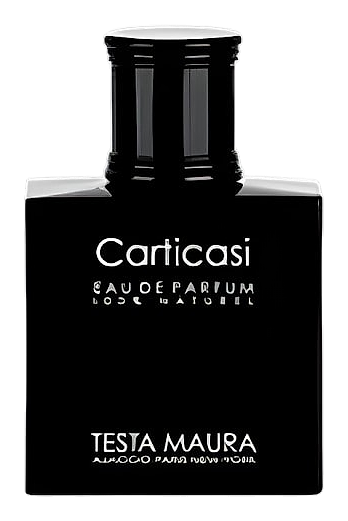
Carticasi translates a particular landscape directly into olfaction, no Mediterranean postcard required. Released in 2008, the scent was composed by Xavier Torre, who built the fragrance around mastic, a resin whose bitter-green, slightly turpentine character defines the entire structure of the composition. It's a material that rarely headlines modern releases, which gives Carticasi a distinct profile from the florals and ambers that dominate the current market. The opening is where Torre's choices become most visible: mastic at full volume, sharpened by galbanum's bitter sting until the air around you tastes like crushed shrub. Within the first hour, rose and ylang-ylang surface, adding a creamy, almost tropical sweetness that tempers the resinous coldness without softening it.
Mastic is the whole show here. Most fragrances that lean green reach for galbanum alone, which gives you that sharp, almost metallic cut-grass sting. Mastic sits in the same family of bitter-resinous aromatics but carries more body, more warmth, a faintly piney undertone that reads less like a freshly mowed lawn and more like sap bleeding from a cracked branch. Pairing it with galbanum doubles down on the green bitterness, which could have tipped the composition into something aggressive or one-dimensional. Instead, Torre threads rose and ylang-ylang through the heart, not to sweeten the deal, but to soften the resin's edges just enough.
The evolution
The first ten minutes are all mastic, loud and green, with galbanum amplifying the bitter-resinous sting until the air around you tastes like crushed shrub. By the thirty-minute mark, rose surfaces underneath, and the composition shifts from something purely vegetal into something more complex. The ylang-ylang adds a creamy, almost tropical undertone that keeps the bitterness from feeling cold. It's a brief window, fifteen or twenty minutes where the scent reads almost floral, before the cedarwood starts to rise. The base phase is where Carticasi earns its reputation. The cedarwood is dry and blond, more reminiscent of pencil shavings than of a forest, and it settles into a long, quiet drydown where the green-resinous character never fully leaves.
Cultural impact
Carticasi occupies a distinctive position in the niche landscape because of how narrowly it commits to its central material. Where many green and resinous fragrances use mastic as a supporting note, Carticasi builds its entire structure around it, giving the composition a sharper, more resinous profile than most of its category peers. This near-exclusive focus makes it a useful reference point for anyone trying to understand what mastic actually smells like outside of a laboratory setting. The galbanum amplifies the bitter-resinous sting in the opening, and the cedarwood base extends that character into a long, quiet drydown.