
The Story
Why it exists.
The beginning
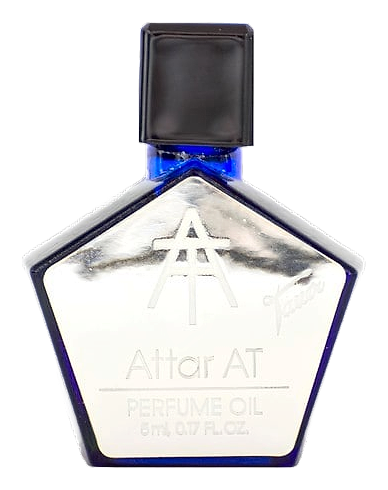
Andy Tauer has spent decades building a house that defies convention, and Attar AT (released in 2017) is among his most uncompromising statements. The name itself is the concept: attar, the traditional Arabian format, highly concentrated perfume oil, undiluted by alcohol or water. What goes into the vial is what lands on your skin. No buffer. No apology. Tauer drew from that tradition deliberately, creating a fragrance that speaks the language of attars while carrying his own olfactory signature.
The choice to work in attar format is also a philosophical one. Where commercial perfumery dilutes to maximize profit per bottle, Tauer went the opposite direction: less product, more substance. The 5 ml vial isn't cost-cutting, it's a constraint that forces the wearer to approach the fragrance differently. One or two dabs. That's the ritual. The oil needs warmth to open, so it performs best close to the skin rather than projecting across a room. This is perfumery as intimacy rather than announcement.
The evolution
The opening announces itself with birch tar, sharp, smoky, almost acrid. Leather follows, not the polished kind but rawhide, slightly animalic. Jasmine appears midway through the first hour: a clean white floral cutting sideways through the darkness. It doesn't soften the composition so much as complicate it. Then the handoff: vetiver and labdanum take over the earthy, resinous middle ground, with castoreum providing that animalic bass note that either compels or repels. By hour three, sandalwood arrives. Mysore sandalwood, creamy and persistent, wraps around everything that came before it and carries the drydown for another ten-plus hours on most skin. The next morning, there's still something there, warm, woody, close. Not a ghost. A remainder.
Cultural impact
Attar AT occupies a specific corner of the Tauer universe: challenging, intimate, format-forward. Released in 2017 as a 5ml dab vial of pure attar oil, it asks the wearer to engage on its own terms. The fragrance has found its audience among those who appreciate the attar tradition and the house's broader commitment to materials over convention.